

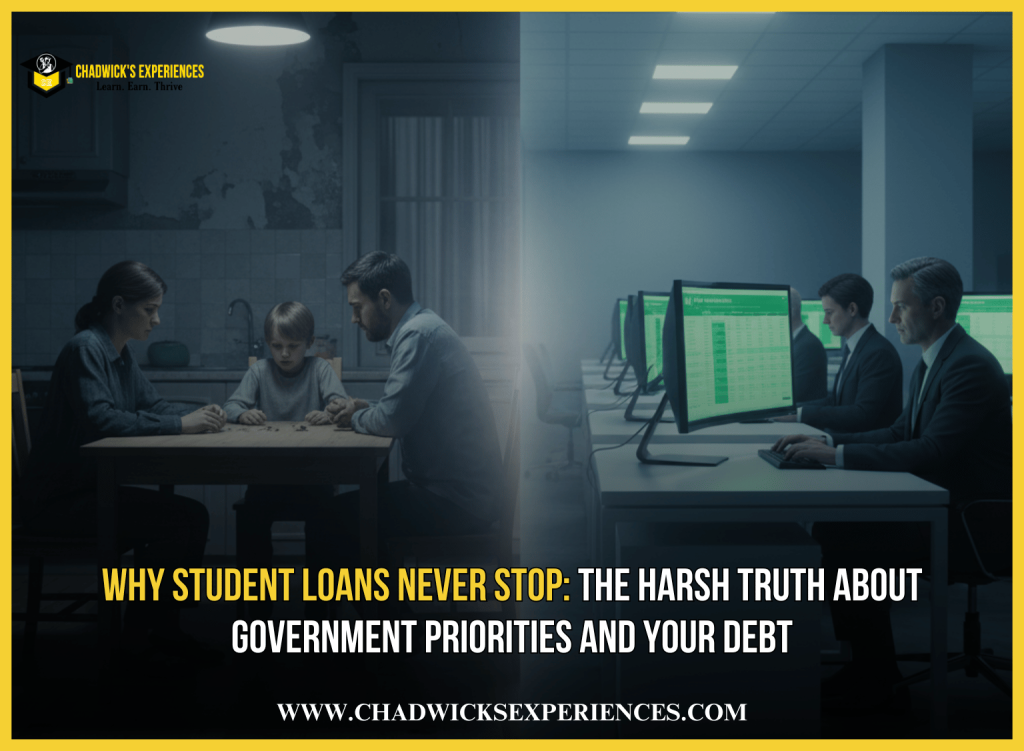
1. The Double Standard Exposed: Food Benefits Freeze, but Debt Collection Rolls On
When talk of a government shutdown hits the news, it’s easy to think it’s just a game played by politicians in Washington, D.C. But it’s not. A shutdown is a very real problem for everyday people, and it shows us exactly what the government truly cares about when the money gets tight.
So, let me ask you a very real question: If the government can cut off food from families who depend on help just to eat, what makes you think they’ll ever hesitate to collect your student loan payment? When essential services stop, but debt collection keeps rolling, it tells us a harsh truth about where the priorities lie in our country.
1.1. SNAP and the Safety Net: Why Essential Food Aid Is First to Be Cut
The Supplemental Nutrition Assistance Program (SNAP) is a lifeline for thousands of American families. It is often called “food stamps.” It helps parents buy groceries—milk, bread, vegetables—to feed their children. This program is a major part of the government’s safety net programs.
- It is essential: For many low-income families, SNAP is the only way to avoid hunger.
- It’s a promise: It is a promise from the government to help its people survive when they are struggling or going through a tough time.
When the government runs out of money or shuts down, those benefits are immediately in danger. Research shows that during past government shutdowns, the continuity of crucial safety net programs like SNAP is quickly threatened, causing widespread anxiety and food insecurity.
1.2. The Immediate Pain of a Frozen Safety Net
Imagine you are a mother or father who has worked hard, budgeted, and followed all the rules, and you rely on these benefits. Then, you hear this message: “Sorry, your food benefits are frozen until further notice.”
How do you explain that to a child who is hungry? How do you stretch an empty pantry?
The problem is more than just money; it’s dignity. It’s the feeling of having a system that promised to help you suddenly pull the rug out from under your feet. When food—something essential to survival—is cut off, it sends a clear message: feeding families is optional.
2. Why Student Loan Collections Are the Government’s Top Financial Priority
Here’s where the clear double standard shows up in our country’s financial priorities.
Food benefits? “We can’t fund that right now; we have to wait for Congress to act.”
Student loans? “Pay up or face consequences.”
Even in the middle of a shutdown, when everything else is stopping, the student loan crisis doesn’t pause. The government doesn’t stop charging you interest. They don’t stop collections. Your debt doesn’t disappear, it waits for you, growing bigger every day.
2.1. Collection is Mandatory: Why Student Debt Is Debt They Must Collect
Why is this different from food? Because the government sees student loans as a guaranteed way to bring money back in. They view it as a mandatory return on investment, not a flexible social program. Student loans are legally structured to be almost impossible to escape.
- No Bankruptcy: Unlike almost all other forms of debt (credit cards, medical bills), it is very hard to wipe out federal student loans through bankruptcy. This makes them a “sure thing” for the government.
- Guaranteed Interest: The interest keeps adding up every single day, whether you are working or not, and whether the government is open or shut down. This constant interest ensures the debt grows, making it harder to pay off.
This legal structure is why experts say it will be hard to change the system, because of the theory that explained why student loans will be hard to dethrone from the top of the financial priority list.
2.2. How the Government Collects Student Loans During a Crisis
When you miss a payment, the consequences are immediate and harsh. Even during periods of national crisis, the collection mechanisms are powerful:
- Garnishments: The government can take money directly out of your paycheck or your tax refund without a court order.
- Interest Accrual: If payments are paused (which is rare outside of special relief like the pandemic), the interest usually still builds up, meaning you owe more when the pause ends.
- Credit Damage: Missing payments ruins your credit score, making it hard to get a car loan, a mortgage, or even rent an apartment later.
The power of government collections in the student loan system is huge. While a shutdown shows the weakness of the safety net, it highlights the unbreakable strength of the debt collection system. Data confirms that the Department of Education’s collection activities often continue even when other non-essential services are stalled, reinforcing the priority of debt repayment over consumer relief.
3. Connecting the Dots: Understanding the System’s Financial Priorities
When food stops but debt continues, what message does that send to the American people?
- That feeding families is optional…
- …but is collecting debt mandatory?
We live in a country where the grocery line shuts down before the loan payment line does. This is a very clear picture of financial priorities that we all must recognize.
3.1. The Message Sent: Debt Over Dignity
The government is essentially saying that the health of the system’s balance sheet is more important than the health of its citizens.
- Punishing the Poor: The system punishes the poor for being poor (by freezing food aid) and ensures that anyone who took out a loan, regardless of their current income, is forced to pay up.
- The Debt Trap: This is how many young people find themselves in a pursuit of education leading to debt traps. They were told college was the key to success, but now they are trapped by the costs, and the system offers no easy way out, even when the nation faces a crisis.
3.2. Your Best Defense: Why Financial Knowledge is Power
The lesson we must learn from this imbalance is simple: You cannot rely on the government to protect you financially. You must protect yourself.
The most powerful thing you can own is not a college degree or a paycheck, but financial knowledge. Understanding how the system works—how to save, how to budget, how to get out of debt, and how to find income without relying on institutions—is the real armor against a failing system.
As we know, not having financial knowledge is worse than not having money. Knowing the rules of the money game is the only way to win when the stakes are this high.
4. Actionable Steps: How to Fight Back Against the Student Loan Crisis
The reality—that the government won’t take prisoners when it comes to money—is scary, but it should also motivate you. You have to take control of your student loan crisis right now.
4.1. Understanding Your Repayment Options
If you are struggling to make payments, do not just stop paying. You have options, and you must use them:
- Income-Driven Repayment (IDR) Plans: These plans set your monthly payment based on how much money you earn. If you earn less, you pay less (sometimes even $0).
- Forbearance/Deferment: These are temporary pauses in your payments, but often interest still builds up, so use these only when you absolutely have to.
- Consolidation: You can group multiple loans into one new loan. This can simplify your payments and sometimes lower your interest rate, giving you a better way to manage the debt.
4.2. The Power of Alternative Career Paths
One of the biggest lessons from the student loan disaster is that a four-year degree is not the only path to a great income. By learning a high-demand skill or trade, you can often earn money faster and avoid the debt trap entirely.
- Vocational Schools: Learn to be an electrician, plumber, or HVAC technician in less than two years with much lower tuition.
- Apprenticeships: Get paid while you learn a trade, with no college debt at all.
This kind of thinking—prioritizing a skill set over massive debt—is the true defense against a system that puts debt collection first.
4.3. Building Your Financial Fortress: Protection Against Economic Shocks
Your goal is to build a financial life that is recession-proof, shutdown-proof, and debt-proof.
- Emergency Fund: Save a small amount of cash that you do not touch. This fund is your lifeline if the government or your employer suddenly stops paying you.
- Budgeting: Track every dollar you earn and spend. Knowing exactly where your money goes gives you back the power.
- Invest in Skills: Whether you go to college or a trade school, make sure you are learning skills that employers need and cannot be easily replaced by a computer or another person.
5. About the Book: The Pastor of the Student Loan Disaster
This book is dedicated to helping people see through the fog of the debt crisis and find a practical path to financial freedom.
Charles A. Chadwick Jr., the author and financial literacy expert, uses his own experience to show you how to beat the system. This book is not about complaining—it’s about taking action.
The Pastor of the Student Loan Disaster: College Debt or Skill Set: A Critical Choice for Success
This resource tackles the harsh realities of student debt with both humor and practical wisdom. It provides ten power-packed “sermons” for financial freedom and offers:
- Practical advice for managing student debt without relying on government forgiveness.
- The power of building a versatile skill set outside of traditional degree paths.
- An honest look at why the current debt system is so hard to defeat.

6. Final Takeaway
We need to stop seeing food aid and student debt as separate issues and start connecting the dots. They are both symptoms of the same core reality: when the system is strained, it protects its assets (debt collection) before it protects its most vulnerable people (the safety net).
If they can stop people from eating—a biological necessity—they will stop at nothing to get their debt payment. Your survival depends not on the system being fair, but on you being prepared. Take control, gain financial knowledge, and build your own fortress today.
