

Can Artificial Intelligence Ever Become Conscious?
This is the question that scientists, philosophers, and tech leaders are all wrestling with right now.
Let us give you the straight answer first. No Artificial Intelligence system today is conscious. Not GPT. Not Gemini. Not any system currently available to the public or in research labs.
What Consciousness Actually Means
Consciousness is your ability to be aware that you exist.
It is knowing that you are the one reading these words right now. It is the inner voice that questions, doubts, dreams, and wonders. It is what makes your life feel like yours.
AI has no inner voice. When you close a chat window the AI does not wonder where you went. It does not possess an identity.
What the Science Actually Says
Researchers make an important distinction between today’s AI and Artificial General Intelligence. This is a theoretical future AI that could reason across all topics like a human.
We are not there.
Current AI operates through machine learning and pattern matching. Reports from the MIT Technology Review highlight that modern AI systems rely on pattern recognition rather than consciousness. Biological processes are required for true awareness, and no current computational system can replicate that.
Will AI Replace Humans? Here is the Honest Answer
Let us address the biggest fear head on.
What AI Does Exceptionally Well
AI is genuinely remarkable at certain things. We must give credit where it is due.
Processing massive amounts of data in seconds
Automating repetitive tasks without fatigue
Identifying patterns humans would miss
Optimizing systems for speed and efficiency
Performing calculations with perfect accuracy
These capabilities are changing industries fast.
What Humans Will Always Dominate
But here is what AI simply cannot do.
Create something from nothing driven by passion and purpose
Form genuine emotional bonds with other people
Lead with empathy during a crisis
Make moral judgments that account for human dignity
Sacrifice something for someone else because it is the right thing to do
The Real Future Collaboration Not Competition
The smartest approach to AI is not fear. It is strategy.
The people winning right now are not fighting AI. They are directing it. They are using AI as a tool while bringing the one thing AI cannot replicate. Human judgment, creativity, and purpose.
This is exactly why building real world skills matters more than ever. As we explored in our deep dive on why AI proves skills beat degrees, the people who thrive in an AI world are the ones who invested in becoming deeply and irreplaceably human.
Are We Becoming Too Dependent on AI? The Warning Nobody Is Talking About
The biggest threat of Artificial Intelligence is not that robots will take over the world. The biggest threat is that humans will let them take over willingly.
Think about how this pattern has already played out. GPS replaced the need to remember directions. Smartphones replaced the need to memorize phone numbers. Streaming replaced the need to choose what to watch.
Every time technology removed a task we gave up a little piece of active human engagement with life.
Now AI is going further. It is replacing thinking tasks. Creative tasks. Decision making tasks. If we let machines do everything what do humans actually do?
Some experts worry that extreme reliance on AI could lead to a generation that creates less, imagines less, and experiences less. And the consequences are civilizational.
This is why life skills matter so much right now. As I have said before at Chadwick Experiences not having financial knowledge is worse than not having money. The exact same principle applies here. Not having human experience is worse than not having the latest AI tool.
Your lived experiences are your greatest asset. Do not outsource them.
Could AI Ever Develop Real Emotions, Or Just Fake Them?
Some researchers believe future systems could develop advanced decision making that resembles emotions.
Future AI may be able to detect emotional signals in your voice and text. It may adapt its responses based on your mood. It may even self improve in ways that look like emotional growth.
But AI can recognize emotions mathematically while humans experience emotions biologically.
Recognizing that someone is sad and actually feeling sadness are two completely different things. One is pattern detection. The other is part of being alive. Simulated empathy is a mirror with no soul behind it.
A grief counselor who has lost someone they love brings something to the room that no algorithm can replicate. A parent comforting a scared child draws from an emotional reservoir that no machine can fill. That is the nature of being human.
Human Emotions Built Civilization
Every major breakthrough in human history started with a feeling. Every discovery, every invention, and every movement that changed the world was born from emotion.
Curiosity. Passion. Frustration. Love. Fear. Hope. Grief. Determination.
The Wright Brothers did not build the first airplane because of an algorithm. They built it because they ached to fly. Civil rights leaders did not march in the face of danger because they calculated the odds. They marched because they felt the injustice in their bones.
Every great book, every great piece of music, and every great work of art started with a human being feeling something so deeply they had to express it. AI exists because of human imagination.
And here is the thing about your personal experiences. The ones you think do not matter. The struggles that felt pointless. They are building something inside you that no AI can duplicate.
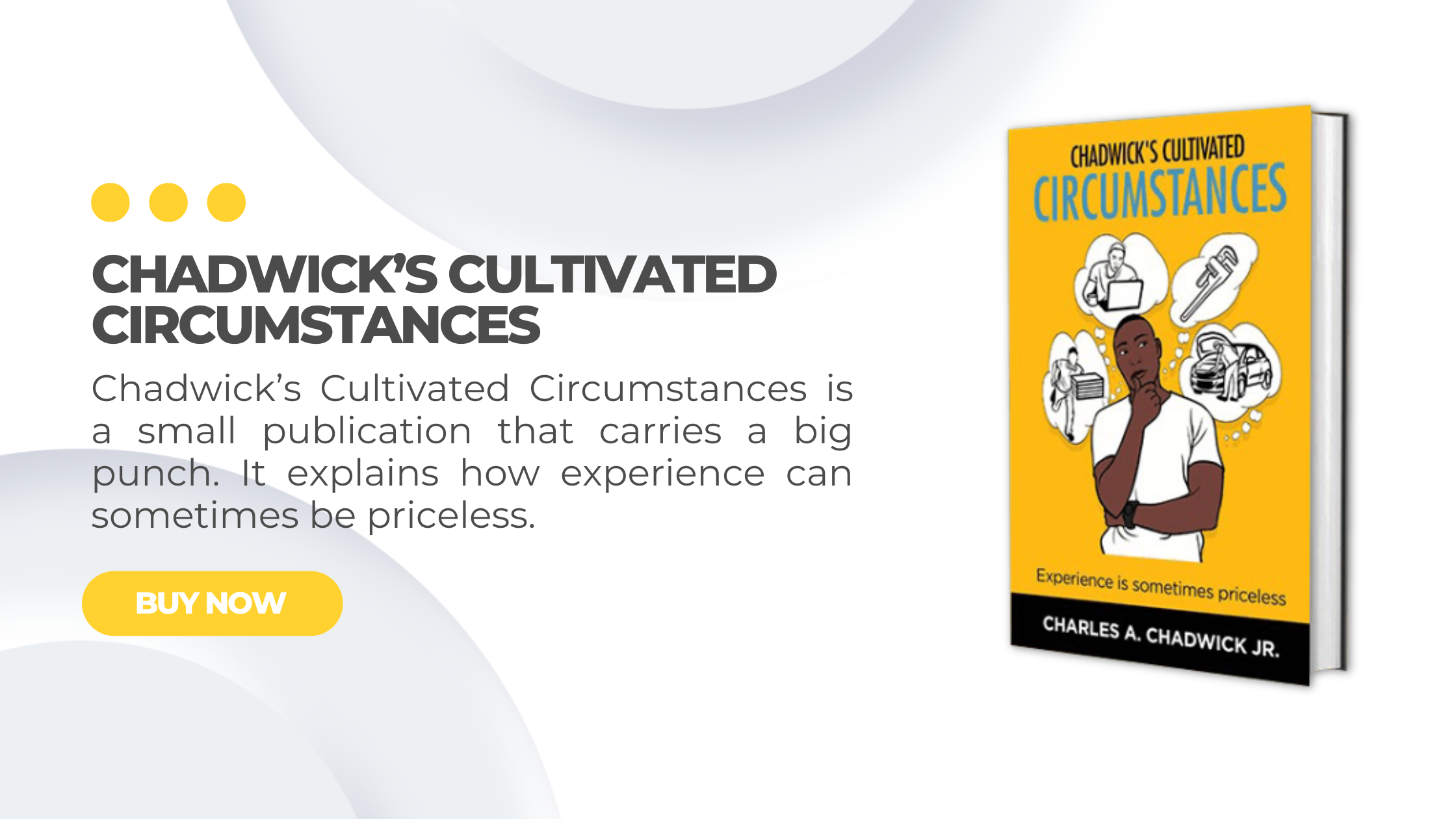
In my book Chadwick’s Cultivated Circumstances, I break down exactly how your diverse experiences translate into real career value and earning power. Every moment you have lived is an asset. Experience is priceless and in an AI world it is becoming even more valuable.
The Risk Nobody Wants to Admit
The tech industry loves talking about what AI can do. Nobody wants to talk about what AI could undo.
The real risk is humans voluntarily giving up creativity because AI creates faster. It is humans stopping deep thinking because AI answers instantly. It is humans losing the ability to sit with uncertainty, discomfort, and challenge because AI removes the friction.
And friction is where growth lives.
Every student who struggles through a hard problem and figures it out is building something AI cannot give them. Every person who faces a challenge, makes hard choices, and comes out the other side wiser has gained a human superpower.
That is the whole message behind The Pastor of the Student Loan Disaster. Nobody is coming to save you from life’s hard problems. The people who win are the ones who develop real skills, real knowledge, and the real resilience that only comes from lived experience.

Technology should amplify the human experience. It should never replace it.
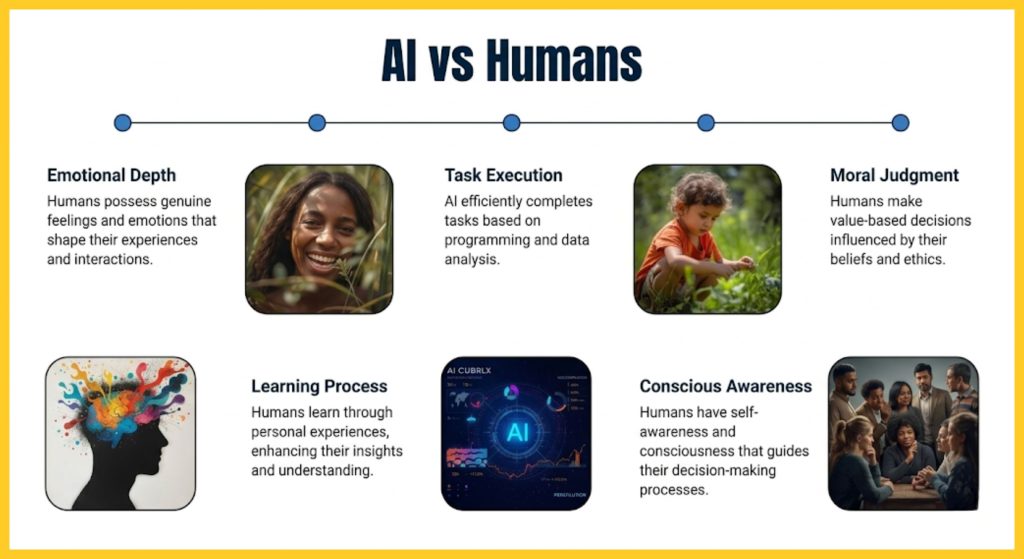
AI vs Humans Comparison
Humans | Artificial Intelligence |
Feel real emotions | Simulates emotions |
Have consciousness | No self awareness |
Learn from life experiences | Learns from data |
Make moral decisions | Follows programmed goals |
Create meaning | Complete tasks |
Key Takeaways
Artificial Intelligence can simulate emotions but cannot truly feel them.
Human emotions come from biology, memory, and personal experience.
No AI system today is conscious or self aware.
The future of AI is collaboration with humans, not replacement.
The Story Is Not Over It Is Still Being Written by Humans
I still think about that snowstorm.
The workers who showed up in the cold for strangers. The family on the rooftop laughing in the snow. Two completely different scenes but both powered by the exact same thing.
The human experience.
That is what built roads. That is what built families. That is what built civilization. Not algorithms. Not data sets. Human beings who felt something deeply enough to act on it.
Here at Chadwick Experiences my mission has always been simple. I want students, parents, and everyday people to never lose sight of what actually matters. The knowledge, the skills, and the lived experiences that make you who you are.
AI is a powerful tool. Use it. But never confuse the tool for the craftsman.
Your story is still being written. And no machine can write it for you.
About the Author
Charles A. Chadwick Jr. is an author and educator focused on personal development, financial literacy, and real world learning. Through Chadwick Experiences, he helps students and professionals understand how life experiences shape career success and personal growth.

