
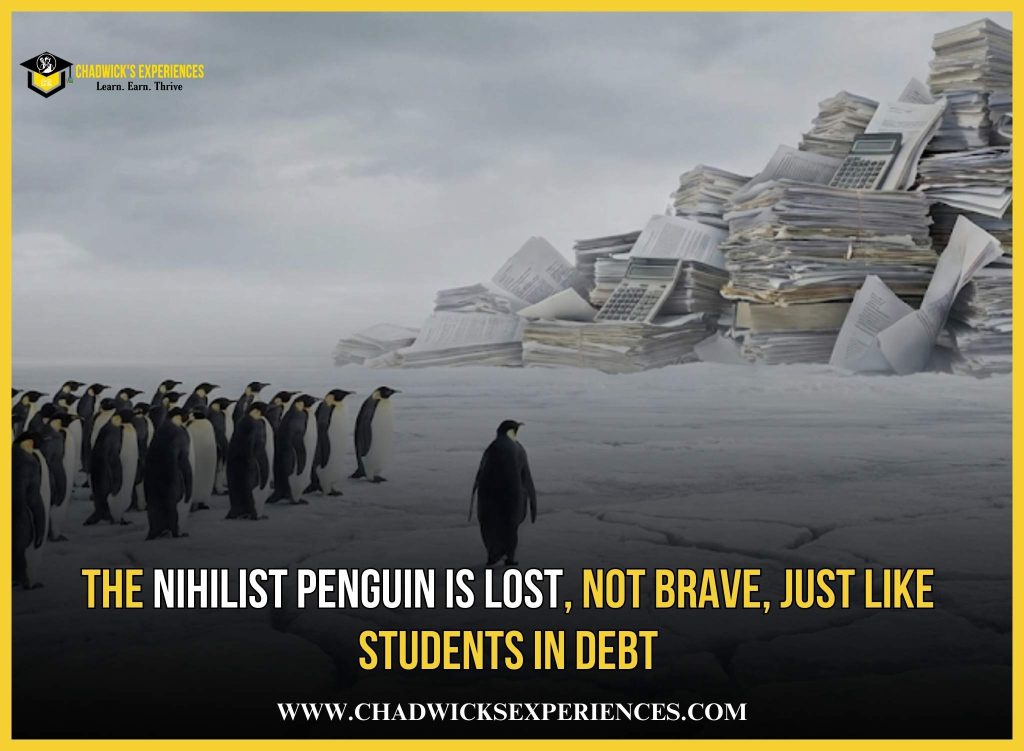
Surreal artwork of a penguin walking toward a mountain of debt paperwork and calculators, symbolizing the student loan crisis.
Table of Contents

The Penguin Isn’t Rebellious, And Neither Are Students in Debt

You’ve seen the video. A lone Adélie penguin breaks away from its colony in Antarctica, turns his back on the ocean—away from food, safety, and survival—and walks steadily toward distant mountains where he cannot live.

Social media calls him brave. They call him a rebel. They say he’s choosing his own path. The hashtag #BeThePenguin has exploded across TikTok, Instagram, and X.com, with millions romanticizing this solitary march.

But scientists who study penguin behavior have a different name for it: a death march.

The penguin isn’t independent. He’s disoriented. And that’s exactly what we do to students every year in America.

The Harsh Truth Behind the Viral Meme

The footage comes from Werner Herzog’s 2007 documentary Encounters at the End of the World. In the film, Herzog asks a penguin researcher: “Is there such a thing as insanity among penguins? Can a penguin just have had enough of their colony?”

The researcher explains that sometimes penguins become confused and wander away from their groups. When researchers find these lost penguins and physically carry them back to the ocean, the penguins will turn around and march inland again, heading toward certain death.

The scientific reality? Penguins can become disoriented due to illness, neurological issues, or navigational errors. The penguin isn’t making a philosophical statement about freedom. It’s confused, potentially sick, and its biological compass is broken.

But in January 2026, the internet latched onto a different meaning. To millions of burned-out workers and anxious students, the penguin represents the desire to walk away from systems that feel crushing.

The problem? They’re not entirely wrong. But they’re looking at the wrong system.

This Is Exactly What We Do to Students Every Year

We take young adults under intense pressure. We tell them there’s only one path to success. We hand them loan documents they don’t fully understand. Then we applaud as they march into decades of debt.

That isn’t ambition. That’s misdirection.

The Student Debt Crisis by the Numbers

The total student loan debt in the United States is $1.814 trillion. To put that in perspective, that’s more than all credit card debt and auto loan debt in America. Only mortgage debt exceeds it.

  • 42.5 million Americans carry federal student loan debt.

  • The average federal student loan debt balance is $39,075.

  • 42% of students who borrow money to attend school are still paying off loans 20 years later.

Who gets hit hardest? The burden doesn’t fall equally. Studies show that Student Loans Are Widening the Wealth Gap, with Black borrowers holding significantly higher debt levels than their white counterparts.

For more data on this, read the Congressional Research Service Overview.

The Colony = The College System, The Mountains = Debt

Now let’s map the penguin metaphor to what’s actually happening to students:

  1. The Colony represents the traditional education system—the “safe” path everyone expects you to follow.

  2. The Ocean represents food and survival. For students, this is financial literacy, Trade Skills, and economic stability.

  3. The Mountains represent certain death. For students, this is the crushing debt that leads to delayed homeownership and decades of stress.

Here’s the critical difference: The penguin is biologically incapable of understanding it’s walking toward death. Students have the ability to choose differently.

How We Send Students to the Mountains

The system that creates student debt isn’t random. It is incentivized.

Societal Pressure: “College Is the Only Path”

From middle school onward, students hear a consistent message: College is the path to success. This narrative ignores reality. Skilled trade workers—electricians, plumbers, HVAC technicians—often out-earn college graduates while carrying zero educational debt.

To understand why this happens, read Pursuit of Education Leading to Debt Traps.

The Forgiveness Myth That Keeps Them Waiting

Perhaps the cruelest part is the recurring promise of loan forgiveness. Students are told: “Don’t worry. The government will take care of it.”

But as we discuss in our article Will Student Loan Forgiveness Happen?, these programs help far fewer borrowers than promised. Waiting for rescue is like watching the penguin march inland and hoping the weather will change. Hope isn’t a strategy.

How I Walked a Different Path: From Plumber to Debt-Free Graduate

I started as a plumbing apprentice. While my peers were taking out $50,000+ in loans, I was learning a trade and earning money.

When I decided to pursue higher education, I didn’t follow the herd. I made strategic choices:

  • Started at community college.

  • Became a Resident Assistant to live on campus for free.

  • Bought used textbooks.

The result? I reduced my college expenses by 40% and earned two degrees while maintaining financial stability.

In my book, The Pastor of the Student Loan Disaster, I detail exactly how I avoided the financial “death march” using humor and hard truths. It is a guide for anyone who wants to stop walking toward the mountains.The Pastor of the Student Loan Disaster is a powerful guide that delivers practical wisdom with humor. It reveals how to cut college costs by thousands while building a debt-free future.

Five Ways to Turn Back Toward the Ocean

If you are a student or parent watching someone march toward financial mountains, here is how to redirect them:

1. Start at Community College

You can cut costs dramatically by completing general education requirements at community college.

Read more: Community College Limits Debt Problems

2. Explore Skilled Trades

According to the Bureau of Labor Statistics, electricians and plumbers earn $50,000-$100,000+. These aren’t “fallback” careers, they are lucrative paths that often outpace college graduate earnings.

3. Become a Resident Assistant (RA)

This single strategy can save $30,000-$50,000 over two years by covering room and board.

4. Strategic Scholarship Application

Don’t just apply for two scholarships. Apply for 50. In Chadwick’s College Checklist, I outline the step-by-step method to finding funding that most students ignore.
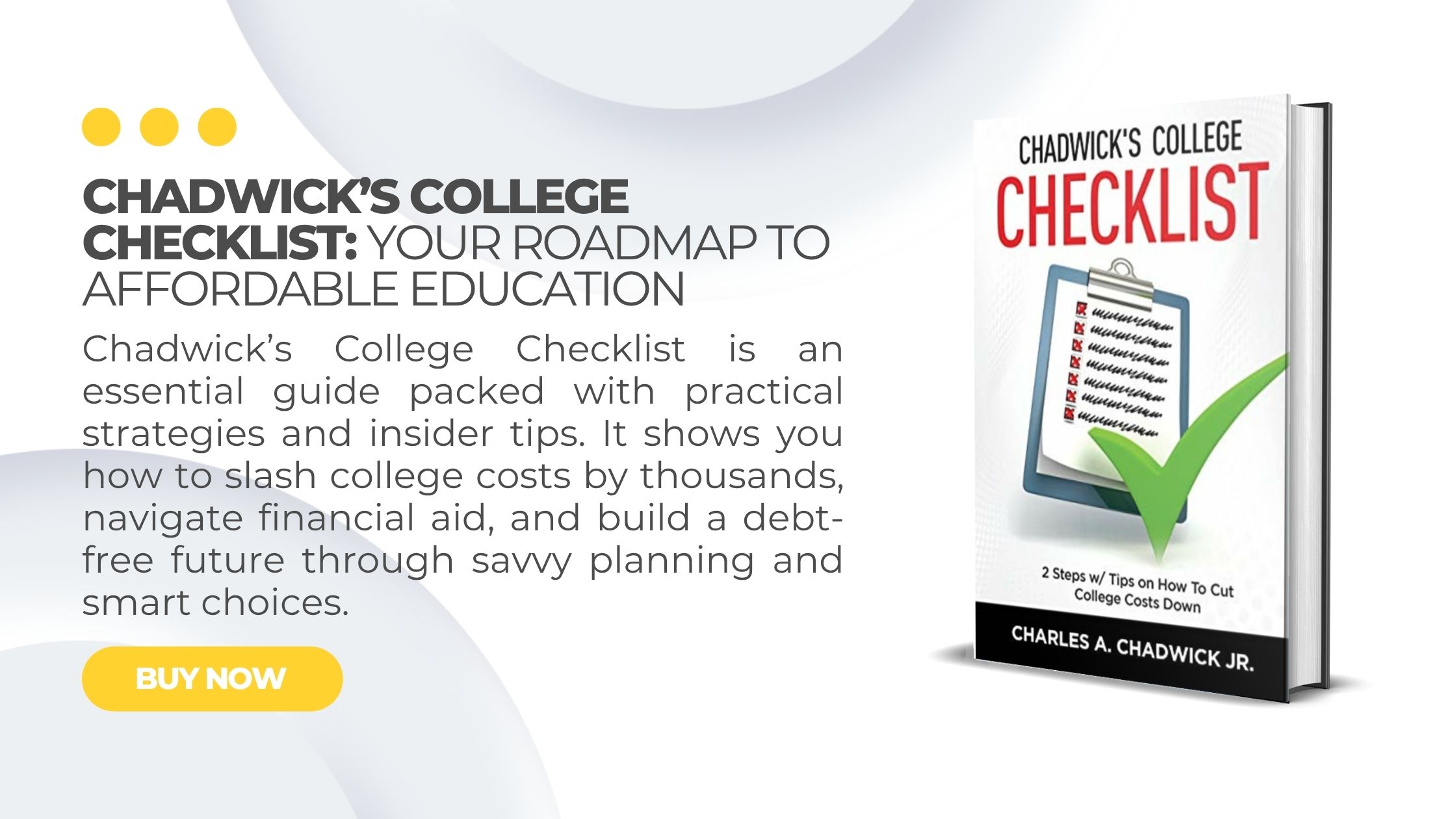
Chadwick’s College Checklist is an essential guide packed with practical strategies and insider tips. It shows you how to slash college costs by thousands, navigate financial aid, and build a debt-free future through savvy planning and smart choices.

5. Calculate ROI Before Borrowing

If you are borrowing $80,000 for a career that pays $35,000, you are programming yourself for the same confused march as the penguin.

Stop Cheering the March

The penguin in Herzog’s documentary lacks the neurological capacity to recognize danger. You do not.

You can learn from others’ mistakes. You can calculate financial outcomes. You can explore alternatives that previous generations didn’t consider.

If you’re a parent, mentor, or leader—stop cheering the march. Turn them back toward the ocean. Toward skills. Toward trades. Toward financial literacy.

The mountains are real. The debt is crushing. But you have something the penguin doesn’t: the ability to choose a different path.

FAQs

The Nihilist Penguin meme comes from Werner Herzog’s 2007 documentary Encounters at the End of the World, showing a lone Adélie penguin walking away from its colony toward mountains—marching to certain death. The clip went viral in January 2026 as millions of people saw it as a symbol of walking away from societal expectations, burnout, and systems that don’t work.

No. Scientists who study penguin behavior say the penguin is likely disoriented, ill, or suffering from neurological issues. It’s not making a conscious choice to reject its colony—it’s confused and unable to navigate properly. The internet’s interpretation is symbolic, not scientific.

Like the penguin walking away from survival toward death, millions of students are pressured into massive loans they don’t understand, marching toward financial hardship instead of exploring debt-free alternatives like trade careers or community college. The key difference? Students have the ability to choose differently if given proper information.

The average federal student loan debt balance is $39,075, while the total average balance including private loans may be as high as $42,673. 42.5 million Americans carry federal student loan debt, making it the second-largest form of consumer debt in the United States after mortgages.

42% of students who borrow money to attend school are still paying off loans 20 years later. The exact timeline depends on the total amount borrowed, interest rate, and repayment plan chosen, but many borrowers spend two decades or more servicing educational debt.

Student loan forgiveness programs help far fewer borrowers than promised, with strict eligibility requirements and high rejection rates. In May 2025, the Trump administration restarted collections on student loans in default, including through wage garnishment. Rather than waiting for uncertain forgiveness, focus on strategic education choices, debt minimization, and active repayment plans.

Yes. By attending community college first, becoming a Resident Assistant for free housing, applying for multiple scholarships, buying used textbooks, and choosing affordable schools, students can dramatically reduce education costs. I personally reduced my college expenses by 40% using these exact strategies while earning two degrees.

Charles A. Chadwick Jr.

Charles A. Chadwick Jr. is an author, speaker, and entrepreneur who shares insights on financial literacy and career growth. His journey from plumbing apprentice to business owner serves as an inspiration for achieving financial independence.

Leave a Reply