

Introduction
For decades, the American narrative has been consistent: education is the “Great Equalizer.” We were sold the idea that a college degree was the silver bullet to lift families out of poverty, bridge the economic divide, and secure a place in the middle class.
But in 2025, the data tells a different, darker story.
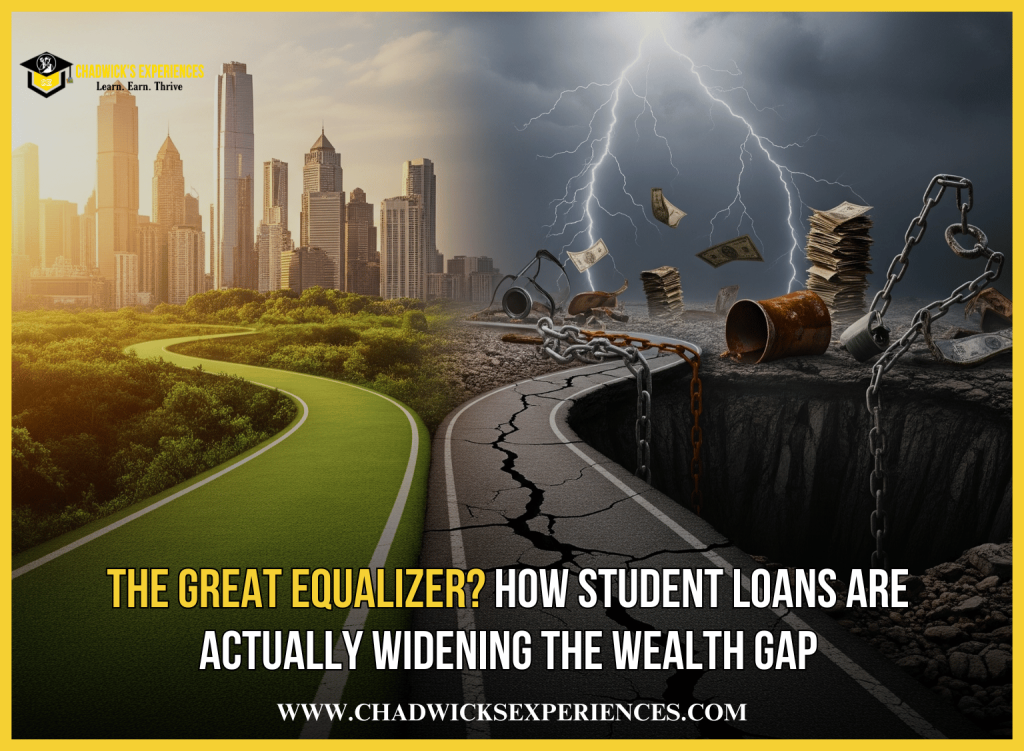
According to recent data from the Federal Reserve, wealth inequality is accelerating, and education debt is a primary fuel for this fire. Instead of leveling the playing field, student loan debt has become one of the primary drivers of the widening wealth gap in America. Rather than a launchpad, the modern university system is acting as a financial anchor, dragging down the net worth of an entire generation and exacerbating inequalities along racial and class lines.
This isn’t just an American problem, but the scale of our crisis is unique. As discussed in our analysis of whether student loan problems are unique to America, the U.S. system penalizes those seeking upward mobility more harshly than almost any other developed nation.
The Math of “Catch-Up”: Starting Life in the Red
The most fundamental way student loans widen the wealth gap is by forcing graduates to start their financial lives with a negative net worth. This isn’t just about owing money; it’s about the opportunity cost of lost time in the market.
Consider the financial trajectory of two graduates, both age 22, both earning $60,000 a year:
- Graduate A (Debt-Free): Parents paid tuition. Starts with $0 debt. Invests $500/month immediately.
- Graduate B (The Borrower): Taken out average loans. Starts with -$35,000 debt. Pays $500/month to loans for 10 years.
The Comparison:
Metric | Graduate A (Debt-Free) | Graduate B (Borrower) |
Age 22 Status | Investing $500/mo | Paying Loan $500/mo |
Age 32 Net Worth | **+$87,000** (Investments) | $0 (Finally Debt Free) |
The “Lost Decade” | Has 10 years of compounding | Has 0 years of compounding |
Age 62 Net Worth | ~$1,012,000 | ~$560,000 |

Note: Assumes 7% annual return. Graduate B starts investing the same $500/mo only after debt is paid at age 32.
As the graph above illustrates, the gap doesn’t remain static. Due to the exponential power of compound interest, the “wealth gap” between these two peers widens from $35,000 at graduation to nearly half a million dollars by retirement. Graduate B effectively paid **$500,000** for their degree when lost potential growth is factored in.
The Housing Trap: Denied Access to Equity
Homeownership has historically been the primary vehicle for wealth creation for the American middle class. It acts as a forced savings account, a tax shield, and an appreciating asset.
However, student loan debt is the single biggest barrier to homeownership for millennials and Gen Z.
The Debt-to-Income (DTI) Ceiling
Mortgage lenders adhere to strict Debt-to-Income (DTI) ratios, typically capping a borrower’s total monthly debt payments at 43% of their gross income.
- A graduate with a $600/month student loan payment has significantly less “room” in their DTI for a mortgage.
- This forces them to either rent for years longer than their debt-free peers or purchase significantly cheaper homes that appreciate less in absolute value.
For a deeper dive into how to navigate this, read our guide on owning a home with student loans, which explores specific strategies for overcoming DTI hurdles.
Research from the Brookings Institution suggests that for every $1,000 in student debt, homeownership rates drop by 1-2 percentage points for borrowers in their mid-20s. While the debt-free are building equity, borrowers are paying off interest.
Exacerbating the Racial Wealth Gap
Perhaps the most insidious effect of the student loan crisis is how it accelerates racial inequality. Far from being a tool for equity, the current system transfers wealth away from minority communities.
The statistics are alarming:
- Borrowing Rates: Black students are more likely to borrow federal student loans and at higher amounts than their white peers to attend similar institutions.
- The “Reverse” Payoff: A study by the Center for Responsible Lending found that 12 years after starting college, the typical white borrower owes just 47% of their original loan balance. In stark contrast, the typical Black borrower still owes 114% of their original balance due to interest capitalization and income disparities.
This systemic issue is discussed in our article Cap or No Cap: Would Forgiveness Narrow the Racial Wealth Gap?, where we analyze if political promises match the economic reality.
This debt burden effectively strips wealth from Black and Latino communities, preventing the transfer of generational wealth and widening the gap for their children.
The Silent Killer: Retirement Insecurity
The wealth gap isn’t just about what you own today; it’s about your security tomorrow. The pressure of student loan payments often forces graduates to pause or minimize contributions to their 401(k) or IRA.
- Missing the Match: Many borrowers prioritize debt repayment over getting their employer’s 401(k) match, literally turning down “free money” (a 100% immediate return).
- The Cost of Delay: As shown in the “Math of Catch-Up” section, delaying retirement savings by just 10 years can cut a nest egg in half.
We are facing a future crisis where an entire generation reaches age 65 with degrees on their walls but insufficient funds in their accounts to retire with dignity.
Stop Letting Debt Control Your Future
Are you tired of feeling like you’re always five steps behind?
The system is rigged to keep you in debt, but you don’t have to play by their rules. In my book, The Pastor of the Student Loan Disaster, I break down the exact strategies you need to escape the debt trap and start building real wealth—regardless of where you’re starting from.
In this book, you will learn:
- Cost Cutting: How to cut college costs by thousands of dollars (40% reduction strategies).
- Debt Management: Practical advice for managing student debt without relying on forgiveness programs.
- Alternative Paths: Career paths beyond traditional degrees that build wealth faster.
- Humor & Wisdom: Ten power-packed “sermons” on financial freedom that make complex topics easy to digest.

Conclusion: The Anchor on the Economy
We need to stop viewing student loans as “good debt.” When a financial instrument prevents homeownership, delays family formation, disproportionately hurts minorities, and stifles retirement investing, it is a toxic asset.
The student loan wealth gap is real, and it is growing every day that interest accrues. Until we acknowledge that the cost of college is stripping the next generation of their ability to build wealth, the “Great Equalizer” will continue to be the “Great Divider.”
If you are looking for a way out, consider alternatives. As we discuss in Tired of College Debt? Try Trade Skillset, shifting your focus to high-value skills can be the fastest route to closing your personal wealth gap.
If you want to close the gap in your own life, the strategy is clear: avoid new debt at all costs, prioritize high-ROI skills over prestige, and attack existing loans with intensity to break free from the cycle.

2 Comments