


Every parent shares the same dream: to see their children happy, secure, and successful. We want them to have lives that are easier than ours were, free from crushing financial stress. For decades, the formula to achieve this dream seemed simple—do well in school, earn a university degree, and life will fall into place. A college diploma was viewed as the ultimate golden ticket to a better future.
But times have changed. That once-trusted roadmap has left millions of young adults buried under a mountain of student loan debt that follows them for decades. Today, when we talk about children choosing careers, we have to be more thoughtful, realistic, and strategic. Success in the modern world is no longer defined just by a framed diploma on the wall. It is defined by skills, adaptability, financial freedom, and informed decision-making.
This comprehensive guide is written for parents who want to help their children build a future that is stable and fulfilling—without starting adulthood in the red. We’ll talk about deep career exploration, identifying natural talents, the honest comparison between college and trade schools, and how to guide your children without controlling their choices.
Why Children Choosing Careers Should Start Early
Many parents make the mistake of waiting until high school to talk seriously about careers. They think, “Let them be kids,” which is a noble sentiment, but by the time 11th grade rolls around, the pressure is already incredibly high. Guidance counselors often push every student toward four-year universities as the only “successful” option. Peers are comparing college applications, and signing up for massive student loans starts to feel like an inevitable rite of passage.
In reality, the process of children choosing careers begins much earlier. Research shows that kids start imagining what they can become as early as age seven. They are like sponges—they observe the adults around them, absorb messages from TV and social media, and quietly decide what feels possible for them.
Starting early doesn’t mean forcing your ten-year-old to pick a permanent job title. It doesn’t mean robbing them of their childhood. It means encouraging curiosity, asking open-ended questions, and showing them that there are many different paths to a successful life. It’s about widening their horizon before society tries to narrow it down to just one expensive path.
The Danger of the “College or Bust” Mentality
If we don’t present alternatives early, children grow up thinking that not going to college means they have failed. This pressure creates anxiety. By introducing concepts like entrepreneurship, skilled trades, and creative arts early on, you validate all types of success. You let them know that whether they wear a suit, a uniform, or a toolbelt, their contribution matters.
Mentorship in Action: Building Awareness
Watch below video to see Charles working with MENAC at a school, mentoring middle and high school students.
MENAC Incorporated is a Veteran-founded and operated nonprofit that is positioned and was purposefully created for the mental growth, educational expansion, and societal awareness of every child, teenager, and young adult between the ages of 12 and 30 years old that lives in an underdeveloped neighborhood and community.
Understanding Your Child’s Natural Talents
Every child is born with a unique set of strengths and inclinations. As parents, we are the detectives of their potential.
Some children love to read and write, getting lost in stories.
Others can’t sit still; they love building with Legos, fixing broken toys, or solving physical puzzles.
Some thrive in social situations, leading the group on the playground.
Others prefer working independently, focusing deeply on one task at a time.
These behaviors are not just personality quirks; they are clues. A child who enjoys taking apart their bicycle and putting it back together might thrive as a mechanic, an engineer, or a robotics technician. A child who loves negotiating with you over screen time might have strong leadership, sales, or business potential.
Shift the Question
Instead of asking the dreaded question, “What do you want to be when you grow up?”—which focuses on a job title—try asking, “What do you enjoy doing right now?” or “What problems do you like solving?”
Helping children connect their current interests to real-world careers builds confidence. It helps them see value in who they already are. When they realize that their natural ability to organize their room could make them a great Project Manager, or their love for drawing could lead to Graphic Design, the future becomes exciting, not scary.
For more insights on how early education choices shape long-term outcomes, read our detailed article on the Value of a High School Diploma.
College vs. Trade School: Making a Smarter Comparison
For years, trade careers have been unfairly labeled as “backup options” or “Plan B” for students who couldn’t handle the rigors of university. This mindset has done a massive disservice to students, parents, and the economy alike.
Skilled trades—such as plumbing, electrical work, carpentry, HVAC, and welding—are essential. They are the backbone of our infrastructure. While technology and Artificial Intelligence (AI) may automate some office jobs, hands-on skilled work remains largely irreplaceable. A robot cannot yet come to your house during a blizzard to fix your furnace.
Breaking the Stigma Around Blue-Collar Careers
I began my own journey as a plumbing apprentice, and I can say with confidence that trade careers offer dignity, stability, and strong income potential. These are not just “temporary jobs”; they are long-term careers that can lead to owning your own business.
When children are choosing careers, all paths deserve equal respect. In many cases, skilled trades outperform traditional degrees financially—especially when the cost of student debt is taken into account. We need to stop looking down on the people who build our cities and keep our lights on.
Job Security: Trades are in high demand. There is a shortage of skilled workers, which means higher wages and better job security.
Speed to Market: A trade certification can take 6 months to 2 years, compared to 4+ years for a degree.
Entrepreneurship: Many tradespeople go on to start their own companies, becoming the CEOs of their own lives.
To see how hands-on careers are making a comeback in education systems, read our article on Trades Returning to High Schools.
The Real Math Behind Student Loan Debt
Let’s look at the numbers, because numbers don’t lie. The average four-year degree can cost tens of thousands, sometimes hundreds of thousands, of dollars. Graduates often begin adulthood with heavy financial obligations that limit their freedom. They might have to delay buying a house, getting married, or starting a family because their monthly loan payments are equal to a mortgage.
Trade apprenticeships work differently. Many apprenticeships allow students to “earn while they learn.” This means they are getting a paycheck and on-the-job training at the same time. By the time a typical college graduate enters the workforce with a diploma and significant debt, a trade professional of the same age may already be a journeyman earning a full salary, with zero debt and money in the bank.
This reality inspired my book, The Pastor of the Student Loan Disaster. It challenges the “gospel” that college is the only path to heaven and shows that there are other ways to find financial salvation.
Resource: Get your copy of “The Pastor of the Student Loan Disaster” here to learn how to avoid the debt trap.
If rising tuition concerns you, read Rising College Costs for a deeper breakdown of where your money is going.

Practical Ways Parents Can Help Children Explore Careers
Career exploration doesn’t have to be a formal meeting or a boring lecture. Simple, real-world exposure can be incredibly powerful and fun. Here are practical activities you can do with your kids.
The Real-World Scavenger Hunt
While running errands or walking through town, play a game. Ask your child to observe different workers and discuss what they notice:
Observation: “Look at that person working on the power lines.”
Tools: “What tools are they using? Are they using a computer, a hammer, or a vehicle?”
Teamwork: “Is the work independent, or are they talking to a team?”
Education: “Do you think this job required a college degree, or specific training?”
Satisfaction: “Do they look happy or stressed?”
This activity broadens their perspective. It helps children notice careers they may never have considered—like landscape architecture, logistics, or municipal planning—that are happening all around them.
Interviewing Family Members
Encourage children to interview relatives, family friends, or neighbors about their work. It can be a simple 10-minute chat. Suggested questions include:
“What is the hardest part of your job?”
“What is the best part?”
“How did you learn to do this?”
“If you could go back, would you choose the same career?”
Hearing the honest “good and bad” offers realistic insight. It teaches them that every job has challenges, but finding work that aligns with your personality makes the challenges worth it.
Teaching Financial Literacy as Part of Career Guidance
Career decisions are inseparable from financial literacy. Yet, teenagers often sign student loan agreements for tens of thousands of dollars without understanding interest rates, repayment terms, or the concept of ROI (Return on Investment).
Schools rarely teach these concepts effectively, making it essential for parents to step in.
The Cost-of-Living Reality Check
This is an eye-opening exercise for teens. Sit down with your child and review real expenses in your area.
Housing: Look up rent for a 1-bedroom apartment.
Groceries: Show them a weekly grocery bill.
Utilities: Explain electricity, water, internet, and phone costs.
Transportation: Calculate car payments, gas, and insurance.
Then, compare those total costs with the entry-level salaries in the careers they’re interested in. Ask, “Does this job pay enough to cover these bills and still leave money for fun?” This exercise doesn’t crush dreams—it grounds them in reality. It encourages informed planning. If they want to be an artist, that’s great—but they might need a plan for a side income or a strict budget.
For more on why this education is missing, read Why Schools Don’t Teach Money Management.
How to Reduce College Costs When College Is the Right Choice
For some careers—like medicine, law, or specialized engineering—college is necessary. It can still be a great option, but only with a strategy. Education is a major purchase, just like a house or a car, and it should be approached with a “buyer beware” mindset.
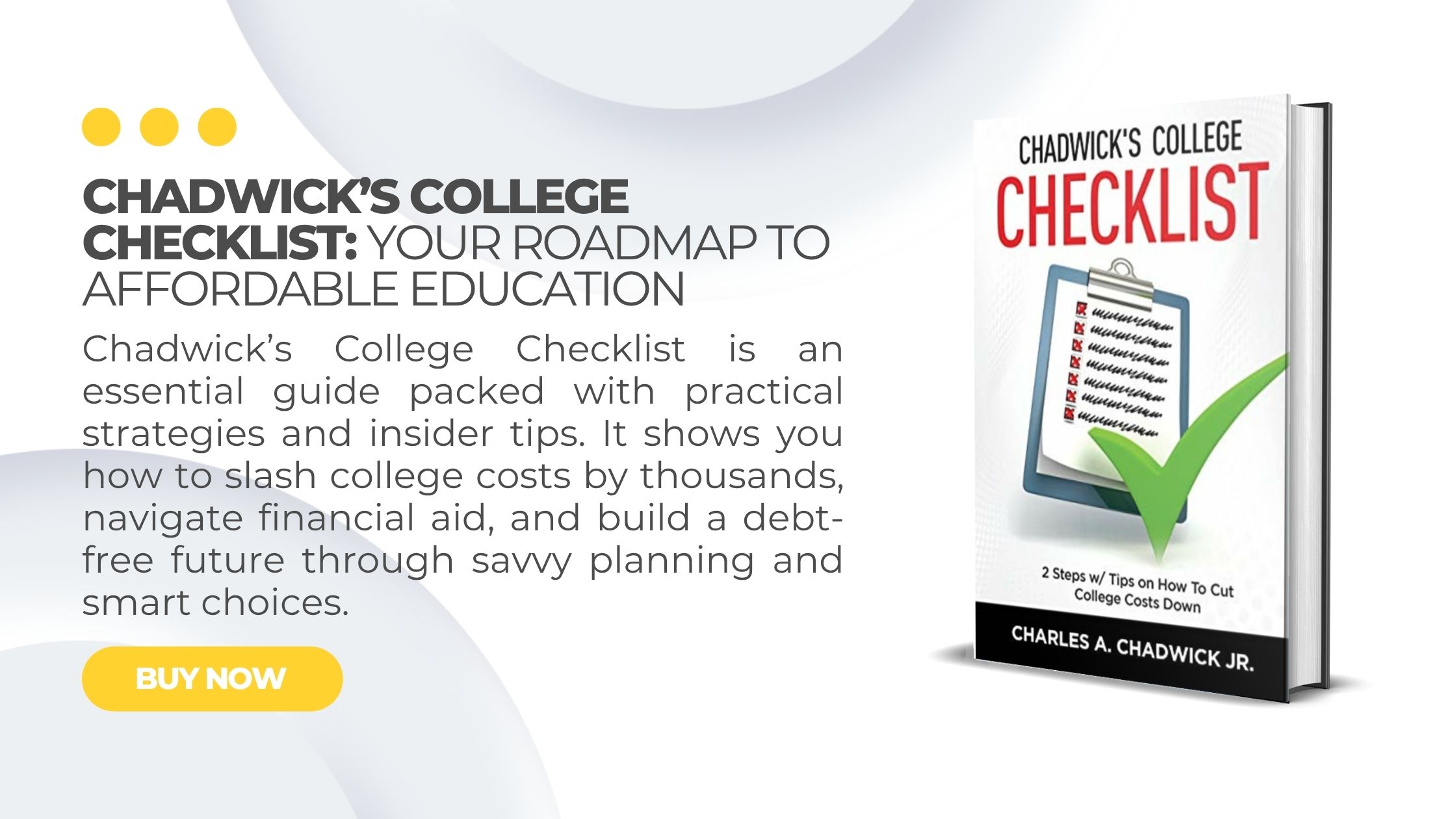
In my book, Chadwick’s College Checklist, I outline the specific strategies that helped me reduce my own college expenses by 40%.
Community College: Completing general education requirements at a community college for a fraction of the cost.
Used Textbooks: Never paying full price for books.
Scholarships: Treating scholarship applications like a part-time job.
Living Expenses: Finding creative housing solutions to avoid expensive dorms.
Resource: Check out “Chadwick’s College Checklist” for the step-by-step guide to minimizing education costs.
For more insights on alternatives, explore our article Student Loan Headache or Alternative Pathway.
The Role of Parents: Support Without Steering
Parents naturally want to protect their children. We want them to have “safe” jobs. But steering them toward a career based on your idea of prestige or fear often leads to burnout and resentment.
Children need ownership over their choices. Fulfillment matters just as much as income. A wealthy lawyer who hates their life is not “successful” in the true sense of the word.
Why Experience Matters More Than Prestige
Encourage your kids to get out there and work. Part-time jobs, volunteering, mowing lawns, or babysitting are invaluable.
Soft Skills: These experiences teach communication, punctuality, time management, and resilience.
Resume Booster: Employers value real-world experience as much as academic performance. A strong work ethic can outweigh a perfect GPA.
As I discuss in Chadwick’s Cultivated Circumstances, diverse experiences increase your value in the marketplace. Every job you work teaches you something that you can take to the next one.
Resource: Learn how to leverage experience in Chadwick’s Cultivated Circumstances.

Future-Proofing Career Choices in a Changing World
No one can predict exactly what the job market will look like in 20 years. The safest skill to teach children is adaptability. Specific technical skills (like coding in one specific language) may change or become obsolete. But the ability to solve problems, think critically, communicate clearly, and learn new things will never lose value.
The Power of Skill Stacking
Encourage children to “stack” their skills.
A tradesperson who also understands business becomes a successful entrepreneur.
A graphic designer who also understands marketing becomes indispensable.
A nurse who speaks a second language has a massive advantage.
For reliable career data and outlooks, visit the U.S. Bureau of Labor Statistics Career Exploration page.
Conclusion: Empowering Children to Choose Wisely
Our ultimate goal as parents is to raise independent, capable adults who can stand on their own two feet. When it comes to children choosing careers, the focus should shift from prestige to purpose, and from debt to skill-building.
Whether your child becomes a surgeon, a carpenter, a teacher, or an artist, what matters is that they understand the costs, the rewards, and the realities of their choice. They need to know that you support them, not just their achievements.
Have open conversations. Listen more than you speak. Let them explore, let them fail, and let them try again. Together, you can build a roadmap toward a stable, debt-free future.
For further reading on the changing landscape of work, check out this article from Forbes on the Rise of Trade Schools.
FAQs
Parents should begin early—by elementary school—through curiosity-based conversations. It’s not about picking a job; it’s about exposing them to different types of work and noticing what sparks their interest.
College can be valuable and necessary for certain paths (like doctors or lawyers), but it is no longer the only route to success. Trade schools, certifications, and skill-based careers offer strong, high-paying alternatives often with less financial risk.
By teaching financial literacy early, exploring non-college options like trades, comparing education costs (ROI), utilizing community college, and using resources like Chadwick’s College Checklist to plan strategically.
Careers built on adaptable skills like problem-solving, critical thinking, and communication tend to last longest. Skilled trades are also highly future-proof as they are difficult to automate.
By providing information, encouragement, and opportunities for real-world exposure—while allowing children to own their final decisions. Your role is to be a guide, not a commander.

Somebody essentially help to make significantly articles Id state This is the first time I frequented your web page and up to now I surprised with the research you made to make this actual post incredible Fantastic job