
Why More College Students Are Choosing Entrepreneurship Before Entering the Workforce
For generations students have followed a familiar path. Graduate from high school, attend college, earn a degree, and then begin searching for a job.
That path still works for many people. However today’s students face a very different economic landscape than previous generations. Rising tuition costs, increasing student loan debt, inflation, artificial intelligence, and a rapidly evolving job market are reshaping what it means to prepare for a successful career.
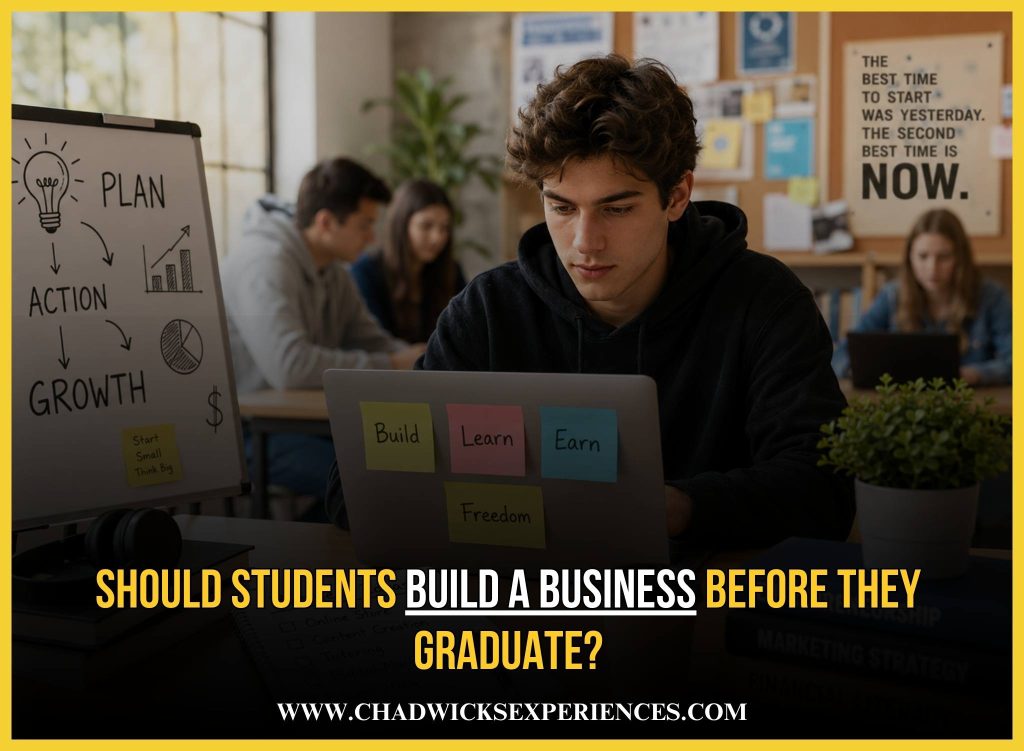
As a result more students are asking an important question. Should students build a business before they graduate?
The answer is not simply yes or no. Every student’s circumstances are different. However there are compelling reasons why every college student should consider exploring entrepreneurship while still in school.
What if students could do more than attend classes? What if they could begin building practical experience, earning income, and developing valuable business skills before receiving their diploma?
In today’s economy entrepreneurship may be one of the most valuable forms of education a student can gain even if it never appears on a transcript.
The Traditional Model Is Changing Fast
For decades earning a college degree was widely viewed as one of the safest paths to financial stability. While higher education remains valuable the employment landscape has changed significantly.
A college degree can open doors but it no longer guarantees employment or long term financial security.
Employers increasingly seek candidates who bring more than academic knowledge. They value practical experience, communication, leadership, problem solving, adaptability, initiative, and the ability to learn quickly.
Interestingly building a business helps students develop many of these qualities before graduation.
Classrooms teach concepts and theories. Entrepreneurship teaches how to apply those concepts in real world situations. That practical experience can help students stand out in both job interviews and future careers. Research and data on global entrepreneurship trends from the Global Entrepreneurship Monitor show how critical these practical experiences are becoming in the modern workforce.
What Employers Actually Want in 2026
According to the Bureau of Labor Statistics, many of the fastest growing careers require both technical expertise and practical transferable skills.
A degree may help secure an interview but skills often determine long term career success.
Across industries employers are looking for people who can solve problems, communicate effectively, adapt to change, and contribute from their first day on the job.
Students who have started and managed a business even a small side business often bring experiences that many graduates cannot demonstrate.
They have worked with customers, solved real problems, managed finances, marketed products or services, and learned to adapt when plans changed.
That kind of hands on experience is difficult to replicate through classroom assignments alone.
Entrepreneurship Is Real World Education
One of the greatest benefits of starting a business is learning by doing. Resources from organizations like SCORE often emphasize that mentoring and real world application are key components of small business success.
When students launch a business they quickly develop practical skills that extend far beyond textbooks and lectures.
They learn how to market products or services, communicate with customers, negotiate agreements, solve unexpected problems, manage finances, handle rejection, and think creatively under pressure.
Whether the business succeeds or fails the learning experience remains valuable.
Many successful entrepreneurs will tell you that their first business was not their most profitable. Instead it became their first real classroom. The lessons learned during that experience often shaped the decisions that led to future success.
Entrepreneurship teaches resilience, critical thinking, and decision making in ways that traditional education often cannot.
The eBay King How I Built a Campus Business With Just a Flyer and a Motorcycle
One lesson I often share with students is simple.
Do not wait until graduation. Use your imagination. It is okay to make cash while you attend class.
I learned this firsthand during my college years between 2007 and 2010.
While attending university I participated in campus activities and held several work study positions with both the Maintenance Department and the IT and Computer Department. Those jobs provided valuable experience but I wanted another way to earn income outside the classroom.
That is when I spotted an opportunity.
At the time eBay was one of the most popular online marketplaces. I noticed many students had unused items sitting in their dorm rooms including broken laptops, old shoes, electronics, clothing, and other belongings they no longer needed.
Rather than seeing clutter I saw potential.
I created a simple business that helped students sell those items on eBay in exchange for a commission.
To promote my service I printed flyers across campus and even placed advertising stickers on my motorcycle. I jokingly called myself The eBay King.
My flyer featured a simple message.
Make Cash While You Are In Class. If You Have a Broken Laptop or an Old Pair of Flip Flops I Can Get You Paid. One Mans Junk Is Another Mans Treasure.
I included my phone number and dorm room number making it easy for students to contact me.
Within days students began bringing me items to sell.
The process was straightforward. Students dropped off an item, I photographed it, created the eBay listing, communicated with buyers, managed the transaction, and after the sale paid the student their share while keeping an agreed upon commission.
Everyone benefited.
Students earned money from items they no longer needed while I generated income by providing a valuable service.
As word spread across campus the business continued to grow.
Eventually even one of my professors asked me to sell his scuba diving equipment. Although the equipment attracted multiple bids the reserve price was not met because of its high value.
Looking back that experience taught me far more than how to sell products online.
It taught me marketing, customer service, sales, negotiation, communication, problem solving, and entrepreneurship.
More importantly it showed me that opportunities often exist right in front of us if we are willing to recognize them.
I did not wait until graduation to begin learning how business works. I started while I was still a student.
That experience reinforced a belief I continue to hold today.
A college degree can open doors but entrepreneurial experience can teach lessons that last a lifetime.
If you want to explore how real world experience can shape both your career and your earning potential, my book Chadwicks Cultivated Circumstances explains how diverse experiences create lasting value in today’s evolving job market.

What If the Business Fails
This is the question many students hesitate to ask.
The truth is simple because many businesses fail.
However failure is not always the opposite of success. In entrepreneurship failure is often one of the most valuable learning experiences.
A student who starts a business that does not succeed can still gain practical skills in sales, marketing, communication, leadership, financial literacy, problem solving, and resilience. Those skills remain valuable long after the business ends.
Unlike many classroom assignments entrepreneurship exposes students to real decisions, real customers, and real consequences. Those experiences help build confidence, adaptability, and sound judgment.
We often discuss how student loan debt creates financial stress. The challenges of starting a business are different. While entrepreneurship can be demanding it also develops skills, experience, and resilience that benefit students throughout their careers.
Sometimes the greatest return on investment is not financial.
Sometimes the greatest return is the experience that shapes future success.
The Student Loan Connection Nobody Talks About
Student loan debt remains one of the most significant financial challenges facing college graduates. Information from Federal Student Aid highlights the reality of borrowing, but what it does not always cover is how to proactively build income while in school.
Many students leave college owing thousands of dollars before earning their first full time paycheck. That debt often influences major life decisions including where to live, which job to accept, and whether they can afford to pursue new opportunities.
Now consider two graduates.
Student A earns a degree, has limited work experience, no additional income, and graduates with significant student loan debt.
Student B earns the same degree but also builds a small business while attending college. Along the way they develop practical skills, earn supplemental income, build professional relationships, and strengthen their financial literacy.
Which student enters the workforce with a stronger foundation?
While every situation is different Student B begins their career with additional experience, transferable skills, and a broader professional network.
Entrepreneurship is not a guaranteed solution to student loan debt. However it can create additional income streams that reduce the need to borrow money or help graduates repay loans more quickly after college.
We also explore this topic in greater detail in our article about expanding your experiences to create more choices for jobs and lifestyles where we discuss how today’s students can earn income while balancing their education.
Technology Has Made Starting a Business Easier Than Ever
There has never been a better time for students to start a business.
Modern technology has significantly reduced the barriers to entrepreneurship. Students can launch businesses using little more than a laptop, a smartphone, and an internet connection. The Small Business Administration offers trusted guidance for starting and managing these exact kinds of ventures.
Platforms such as YouTube, TikTok, Instagram, Shopify, Etsy, Fiverr, Upwork, and AI powered tools have made it possible to reach customers, market services, and generate income with relatively low startup costs.
Many successful businesses begin with a simple idea, consistent effort, and a willingness to learn.
When I started my campus business in 2007 I relied on printed flyers and advertising stickers on my motorcycle to attract customers.
Today’s students have access to social media, digital marketing platforms, ecommerce marketplaces, and AI tools that make starting and growing a business more accessible than ever before.
The barriers to entry have never been lower while the opportunities have never been greater.
Business Ideas College Students Can Start With Little to No Money
Students do not need a large investment or a business degree to begin building entrepreneurial experience.
Many successful businesses start with practical skills, creativity, and a commitment to solving real problems.
Some business ideas that students can start with little to no money include the following.
- Social media management
- Content creation
- Podcasting
- Freelance writing
- Graphic design
- Photography
- Tutoring services
- Lawn care
- Pressure washing
- Ecommerce
- Book publishing
- Digital marketing
- AI consulting
- Online coaching
The goal is not necessarily to build a million dollar company before graduation.
Instead the objective is to gain practical experience, develop marketable skills, earn additional income, and create opportunities that continue to provide value throughout a career.
For many students even a small side business can become an important stepping stone toward long term financial independence and professional growth.
Why Financial Literacy Is the Real Missing Class
One reason many students struggle financially after graduation is not necessarily because they chose the wrong major.
Instead many graduate with strong academic knowledge but limited financial knowledge.
Organizations like the Consumer Financial Protection Bureau provide reliable financial education resources, but applying that knowledge is where entrepreneurship comes in. Entrepreneurship helps bridge that gap by teaching practical financial concepts that many traditional classrooms do not cover.
Students learn how to create a budget, manage cash flow, understand profit and loss, prepare for taxes, attract customers, price products or services, and evaluate financial risk.
These are lifelong skills that extend well beyond running a business. They help students make informed financial decisions, build wealth responsibly, and navigate an increasingly complex economy.
Most schools teach students how to qualify for a career. Entrepreneurship teaches students how money works and how value is created.
That distinction can have a lasting impact on both financial stability and career success. This aligns perfectly with our discussion on why financial education without real world application is failing students.
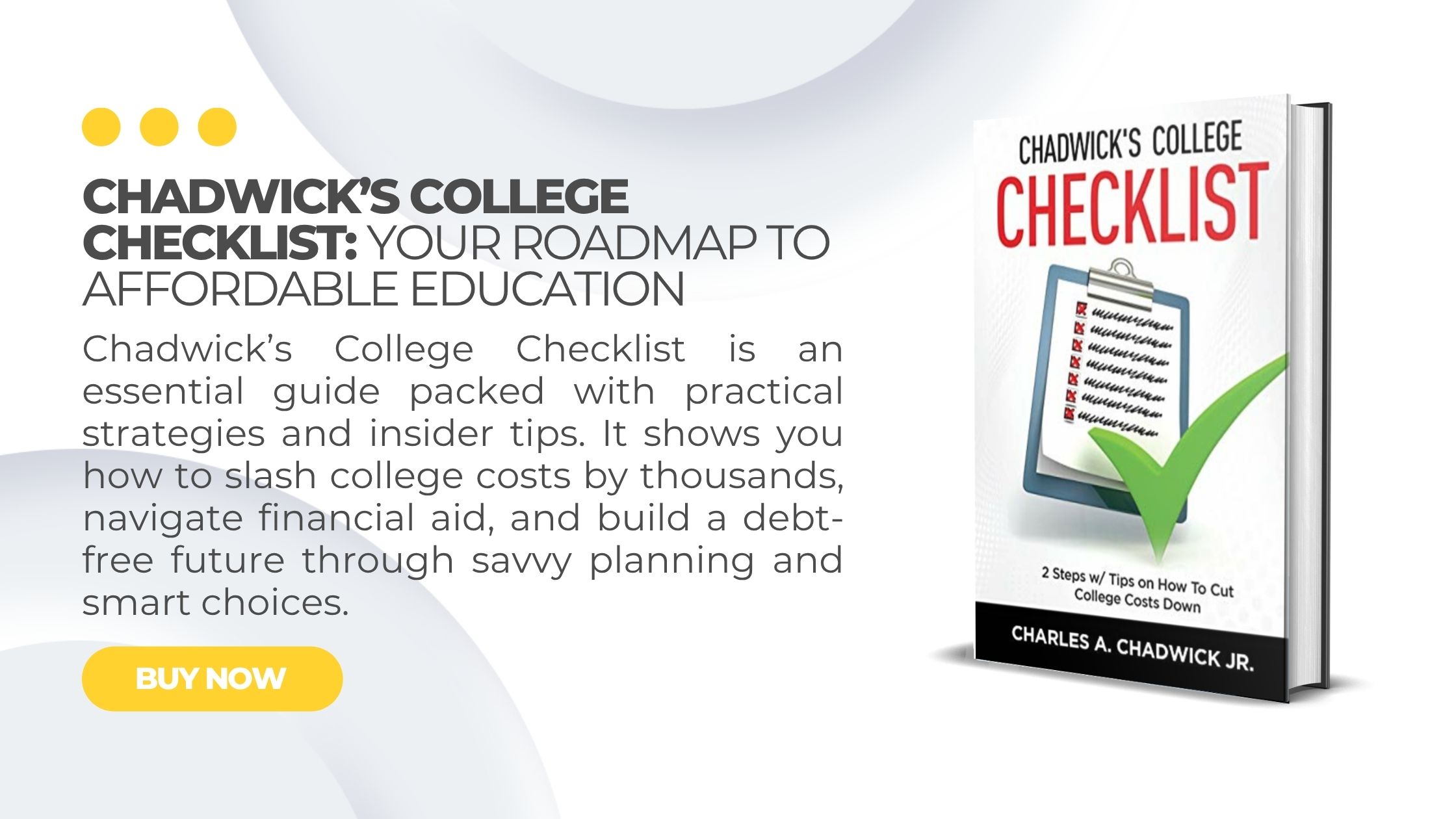
If you want to make smarter education and financial decisions before graduation my book Chadwicks College Checklist provides practical strategies for reducing college costs, improving financial literacy, and graduating with less debt.
Experience Is Sometimes Priceless
One of the most valuable lessons I have learned throughout my journey is that experience often becomes the greatest teacher.
Classrooms provide knowledge but experience provides perspective.
Experience builds confidence, strengthens character, improves judgment, and develops the ability to make better decisions under pressure.
Sometimes you earn money.
Sometimes you earn experience.
The most fortunate people earn both.
In today’s rapidly evolving economy where technology continues to reshape industries and create new opportunities, students who combine education with practical experience, financial literacy, and entrepreneurship will be better prepared for long term success.
A degree provides a strong foundation but experience often determines how effectively that knowledge is applied in the real world.
Final Thoughts
Not every student needs to become a full time entrepreneur.
However every student should seriously consider developing entrepreneurial skills before graduation.
Starting a business encourages students to strengthen leadership, communication, problem solving, adaptability, financial literacy, and resilience. Even if the business never becomes a lifelong career the experience gained can create opportunities that a degree alone may not provide.
Perhaps the better question is not should students build a business before they graduate?
Perhaps it is can students afford not to learn how business works before entering the real world?
As the economy continues to evolve students who combine education, practical experience, financial literacy, and entrepreneurial thinking will be better positioned to adapt, compete, and succeed.
As someone who once rode a motorcycle across campus promoting my eBay King business while helping fellow students turn unused items into cash I can confidently say this.
Do not wait until graduation. Use your imagination. Start learning by doing.
The lessons you gain today may become the foundation of tomorrow’s opportunities.
