

Not too long ago, people assumed the United States would always dominate international basketball. American players were seen as the gold standard. The best of the best.
That narrative has changed dramatically.
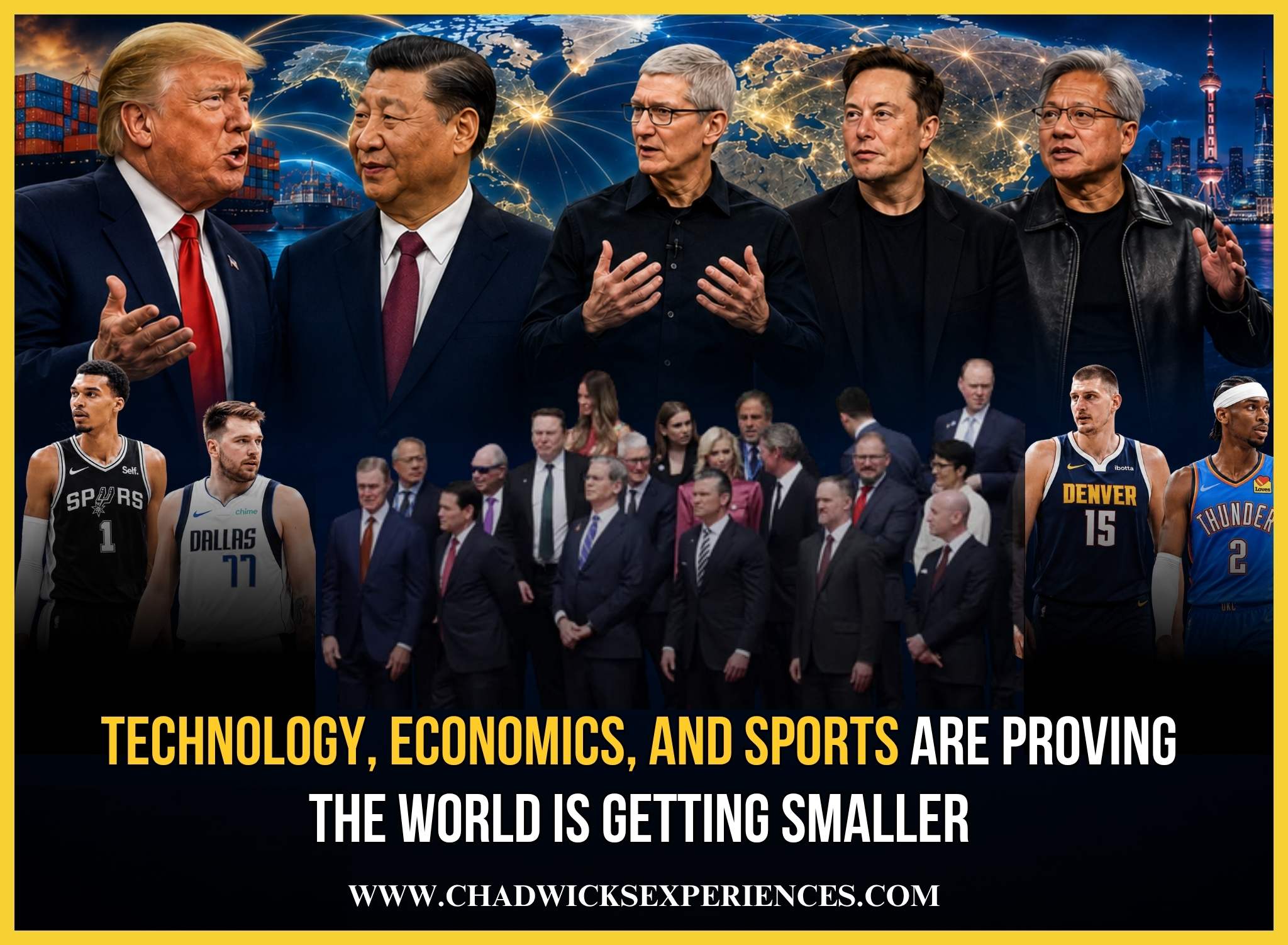
Victor Wembanyama from France is rewriting what we thought was possible for big men in basketball. Luka Dončić from Slovenia became one of the most skilled players in the league before most American prospects even got their footing. Nikola Jokić from Serbia is a multiple MVP winner who plays the game at a level few have ever seen. Shai Gilgeous-Alexander from Canada is now one of the most dominant guards in the sport.
Countries across the globe are developing talent, coaching systems, discipline, and confidence at a pace that is hard to ignore.
And the same thing is happening economically.
Other nations are building stronger education systems. They are training skilled workers faster. They are embracing technology and innovation without the same financial roadblocks that slow American students down.
Competition is no longer local. It is global. And the scoreboard is changing.
An Excerpt From The Student Loaners
This reminds me of something I wrote in my latest book, The Student Loaners: Are You A Winner or a Loser? On page 39, I laid it out like this:
Now, let me ask you something real—something we don’t talk about enough.
When was the last time you attended a college graduation?
The energy is always electric. Caps fly into the air like confetti. Families cheer with tears of pride. Graduates high-five professors, hug classmates, and wave joyfully to their loved ones in the crowd.
At that moment, it feels like everyone won together. The whole class celebrates together as a team. It’s powerful. It’s emotional. It’s unforgettable.
But then… real life kicks in. What happens after the ceremony, when the confetti settles, and the student loan bills start arriving? Does that same “team energy” still exist? Where is that unity when the payments begin—month after month?
When one graduate defaults, does it hurt the others? Maybe not immediately… but what about in the long run? We have to think and look at the big picture. Could a wave of defaults begin to affect how lenders or even employers view entire graduating classes? Will financial systems start calculating risk not just by the individual—but by the collective reputation of a generation?
And zoom out even further: America’s students aren’t just competing with each other anymore. The academic and economic playing field is global. Look no further than the 2024 Olympics. I watched it myself—Team USA’s men’s basketball squad barely escaped with a one-point win over South Sudan.
Final score? 101-100.
A reminder that the world is catching up—fast.
That same momentum is happening in education and economics. Students in other countries are training harder, learning faster, innovating bolder—and often, without the crushing weight of student debt.
So, the question becomes:
How will America’s students fare in the rapidly evolving global economy?
Will the weight of student loan debt hold them back from competing, advancing, and thriving?
Will students from certain schools—or even entire graduating classes—begin to face tighter restrictions, tougher rules, or limited opportunities simply because of the rising tide of defaults?
It’s not just something to think about. It’s something we must act on.
Because the world is changing fast—and the choices we make now, as students, educators, parents, and leaders, will define the future legacy of this generation.

If that passage hits home for you, grab a copy of The Student Loaners: Are You A Winner or a Loser? It is a straight-talk guide to understanding student debt like a game — and learning how to actually win it.
America’s Students Are Competing Globally — Ready or Not
Here is the part that keeps me up at night.
American students are entering a global race carrying enormous financial weight before their careers even begin.
The average student loan borrower graduates with tens of thousands of dollars in debt. That debt does not sit quietly in the background. It shapes every decision — where to live, what job to take, whether to start a business, whether to buy a home.
Meanwhile, students in other countries are stepping into the workforce with far less financial pressure. They have more flexibility. More room to take risks. More freedom to innovate and build.
That gap matters more than most people realize.
We often talk about how student loan debt creates stress rather than success — and that stress is not just personal. It has economic consequences for the entire country.
The future workforce is not going to be judged purely on degrees. Employers worldwide are increasingly looking at:
- Adaptability — Can you pivot when things change?
- Critical thinking — Can you solve problems others cannot?
- Technology skills — Can you work with AI and digital tools?
- Real-world experience — Have you actually done the work?
- Creativity and communication — Can you connect and contribute?
A diploma alone does not check all those boxes anymore. And the rest of the world already knows it.
Is Technology Really Making the World Smaller?
Absolutely. Without question.
Think about what was impossible just twenty years ago that is completely normal today.
A freelancer in another country can compete for the same remote job as someone sitting in Chicago. A small business owner in rural America can sell products globally from a smartphone. An AI tool released this morning can put pressure on entire industries by this afternoon.
Technology has dissolved borders in ways that tariffs and treaties never could.
The Bureau of Labor Statistics consistently tracks how automation and technology are reshaping workforce demands across industries. The message is clear — the skills that create long-term economic security are shifting fast.
And here is the part that should wake everyone up.
Artificial intelligence does not respect geography. It does not care whether you live in New York or New Delhi. It is disrupting industries on every continent at the same time.
That means the young person in another country who is learning AI tools, coding skills, and technical trades right now? They are your competition. Not just the kid down the street.
This is not meant to scare you. It is meant to motivate you.
Because the people who understand this shift — and prepare for it — are the ones who will thrive.
The Bigger Question Every Student Should Be Asking
Most conversations about education start with the same question.
“What degree should I get?”
That is not a bad question. But it is no longer the most important one.
The bigger question — the one that actually determines your future — is this:
“How do I stay globally competitive in a world that is changing faster than any textbook can keep up with?”
That question leads to very different answers.
It might mean getting a degree strategically — choosing fields with strong global demand and keeping your debt as low as possible. It might mean learning a skilled trade that cannot be outsourced or replaced by a robot. It might mean building real-world experience alongside any education you pursue.
Speaking of trades — the return of trade education in high schools is one of the most important trends happening in American education right now. Plumbers, electricians, HVAC technicians, and welders are in massive demand globally. These are skills that travel. Skills that pay. Skills that no foreign economy can easily take away from you.
And before you make any major education decision, you need financial knowledge to back it up. The truth about financial education and its impact on lives is something every student and parent should understand before signing any loan papers.
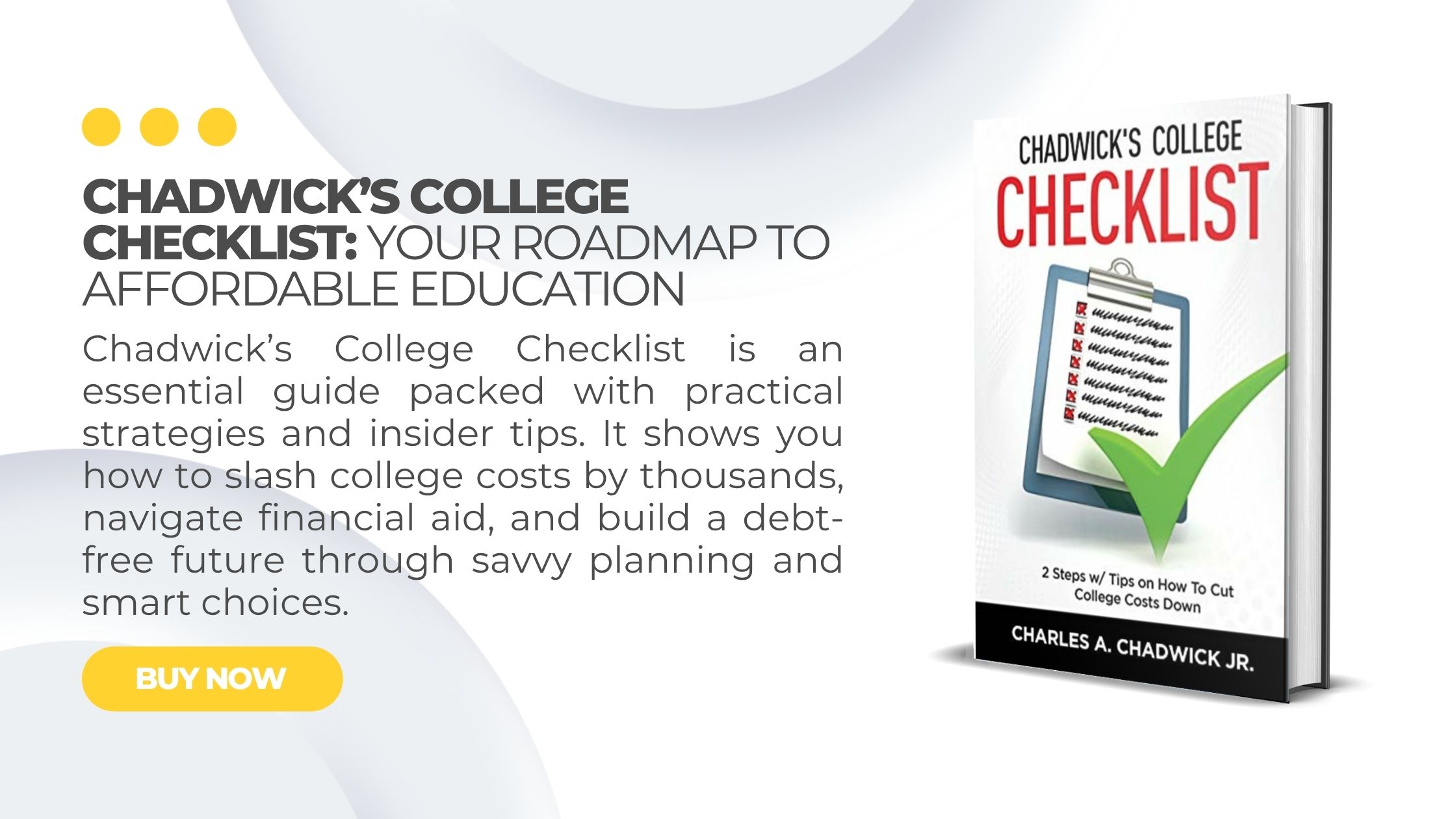
If you want a step-by-step blueprint for making smarter education choices without drowning in debt, my book Chadwick’s College Checklist breaks down exactly how I cut my college costs by 40% — with practical strategies any student can apply today.
The world is not waiting. And neither should you.
Final Thoughts
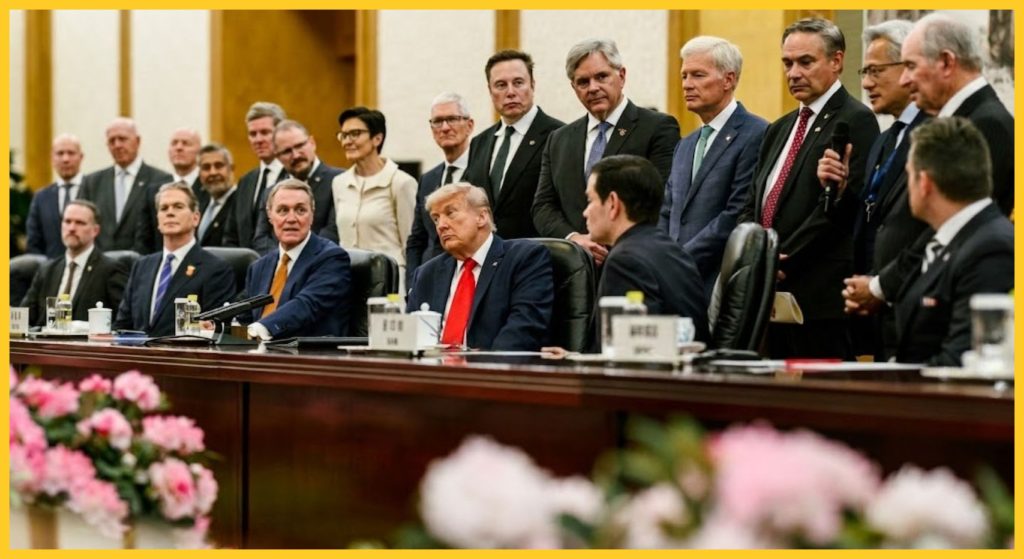
The image of President Trump, President Xi Jinping, and America’s most powerful tech CEOs sitting together in Beijing tells a bigger story than most headlines captured.
It tells us that the world is one economy now.
Sports prove it — international players are dominating leagues once ruled by Americans alone.
Technology proves it — AI and digital tools are connecting and disrupting markets worldwide simultaneously.
Education proves it — the students working hardest today, with the least financial baggage, are positioned to lead tomorrow.
The choices students, parents, educators, and leaders make right now will shape an entire generation’s financial future.
The world is not slowing down for anyone.
Economics is no longer local. Economics is worldwide.
The only question left is — are you ready to compete?
