
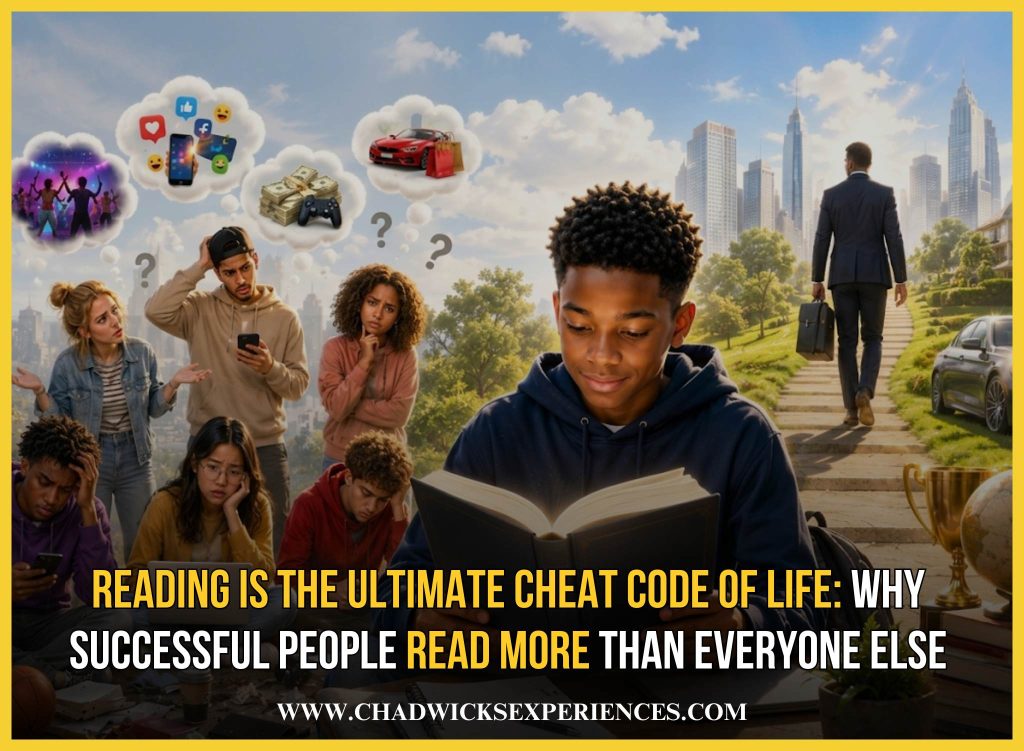
I’ve said it for years, and I’ll keep saying it. Reading has been one of the single greatest investments of my entire life.
It shaped how I understand student loans. It shaped how I understand economics, government policy, financial literacy, career planning, and wealth building. None of that came from a classroom. It came from putting in the hours with a book, a report, or a document most people would rather skip.
But my connection to reading goes deeper than personal growth. It’s tied to my own history.
Growing up as an African American, I think a lot about a chapter of this country’s past that most people don’t like to talk about. During slavery, enslaved people who were caught learning to read could face brutal punishment. Whippings. Fines against anyone who taught them. In the most extreme cases, that punishment turned deadly.
Between 1740 and 1834, states including South Carolina, Georgia, Virginia, North Carolina, Alabama, Louisiana, and Mississippi all passed laws that made it a crime to teach an enslaved person to read or write, according to historical records preserved by the Library of Congress. Slave owners understood something a lot of people still underestimate today. Knowledge is power. They were so afraid of what an educated mind could do that they made learning itself illegal.
And people risked everything to learn anyway. Frederick Douglass taught himself to read by trading bread for lessons with white children in his neighborhood. Enslaved men and women ran secret schools at night, teaching each other letter by letter, page by page, knowing the risk they were taking.
That history isn’t just a history lesson. It’s a reminder.
Knowledge has always carried power. People risked a whipping for it. Some risked their lives for it.
Today, nobody is going to punish you for opening a book. Reading is free. It’s legal. It’s sitting on a shelf or a screen, waiting on you to pick it up.
And yet millions of people don’t.
That contrast is something I think about often. People once risked everything for the right to read, and today most people won’t even give it thirty minutes a day.
Reading remains one of the greatest tools you have for changing the direction of your life. It changed mine. It can change yours too.
Reading Helps You Avoid Expensive Mistakes
Here’s the part that matters most to me, and the reason I built my entire career around it.
One good book can save you thousands of dollars.
One financial book might help you dodge a pile of unnecessary debt. One investing book might reshape your entire retirement plan. One skilled trade guide might introduce you to a career path you never even considered.
Reading isn’t just entertainment. Sometimes it’s the highest-return investment you’ll ever make in your life.
The data backs this up. A recent breakdown of financial literacy statistics found that only 49% of U.S. adults can pass a basic financial literacy test, according to CoinLaw’s 2026 report. That means roughly half the country is making major money decisions — loans, credit cards, mortgages, without the basic knowledge to do it well.
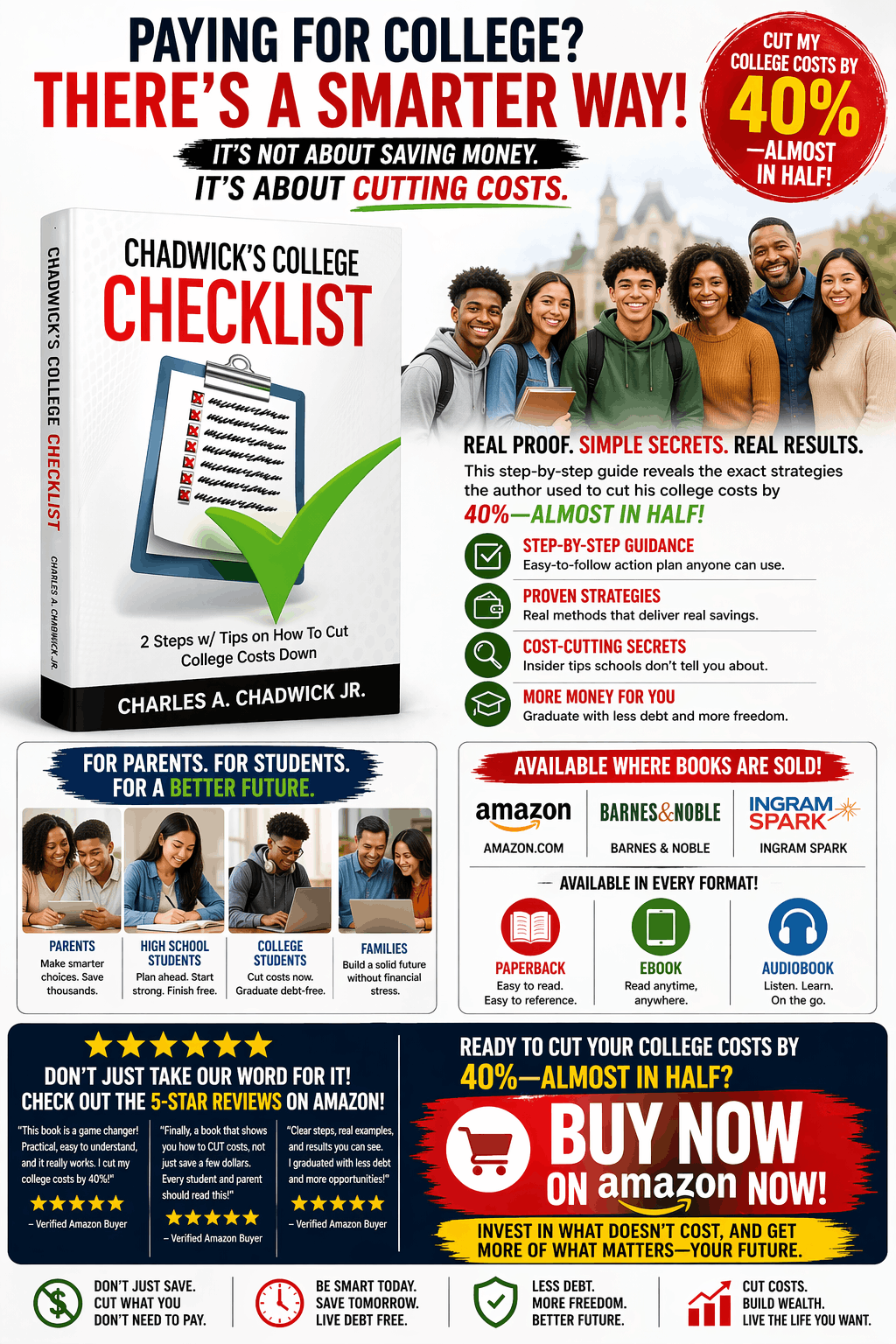
That gap is exactly why I wrote Chadwick’s College Checklist. Inside it, I break down the exact strategies I used to cut my own college costs by 40% before I ever signed a single loan document. Living as an RA for free housing. Buying used textbooks. Applying for scholarships most students never even look at. None of it was luck. It was research, and it started with reading.
If you want a deeper look at how financial knowledge (or the lack of it) shapes people’s futures, check out our piece on why not having financial knowledge is worse than not having money. It says something most people don’t want to hear, but need to.
Parents Should Read Alongside Their Kids
Parents tell their children to read more. But kids learn more from watching than listening.
Picture a household where everyone reads for thirty minutes each night. Budgeting, investing, careers, trades, and college all become dinner table conversations instead of stressful surprises later.
Reading becomes a family habit. Family habits become family culture. And family culture shapes what your kids do with their own money twenty years from now.
This matters most at one specific moment: the moment a parent is asked to co-sign a student loan. That single signature can follow a family for decades. Parents who read the fine print, research repayment terms, and understand interest rates before signing make very different decisions than parents who don’t.
Students Need More Than Classroom Knowledge
Schools teach plenty of valuable subjects. But most students graduate without a real understanding of:
- Student loans
- Interest rates
- Credit scores
- Investing basics
- Entrepreneurship
- Skilled trades
- Career planning
- Opportunity cost
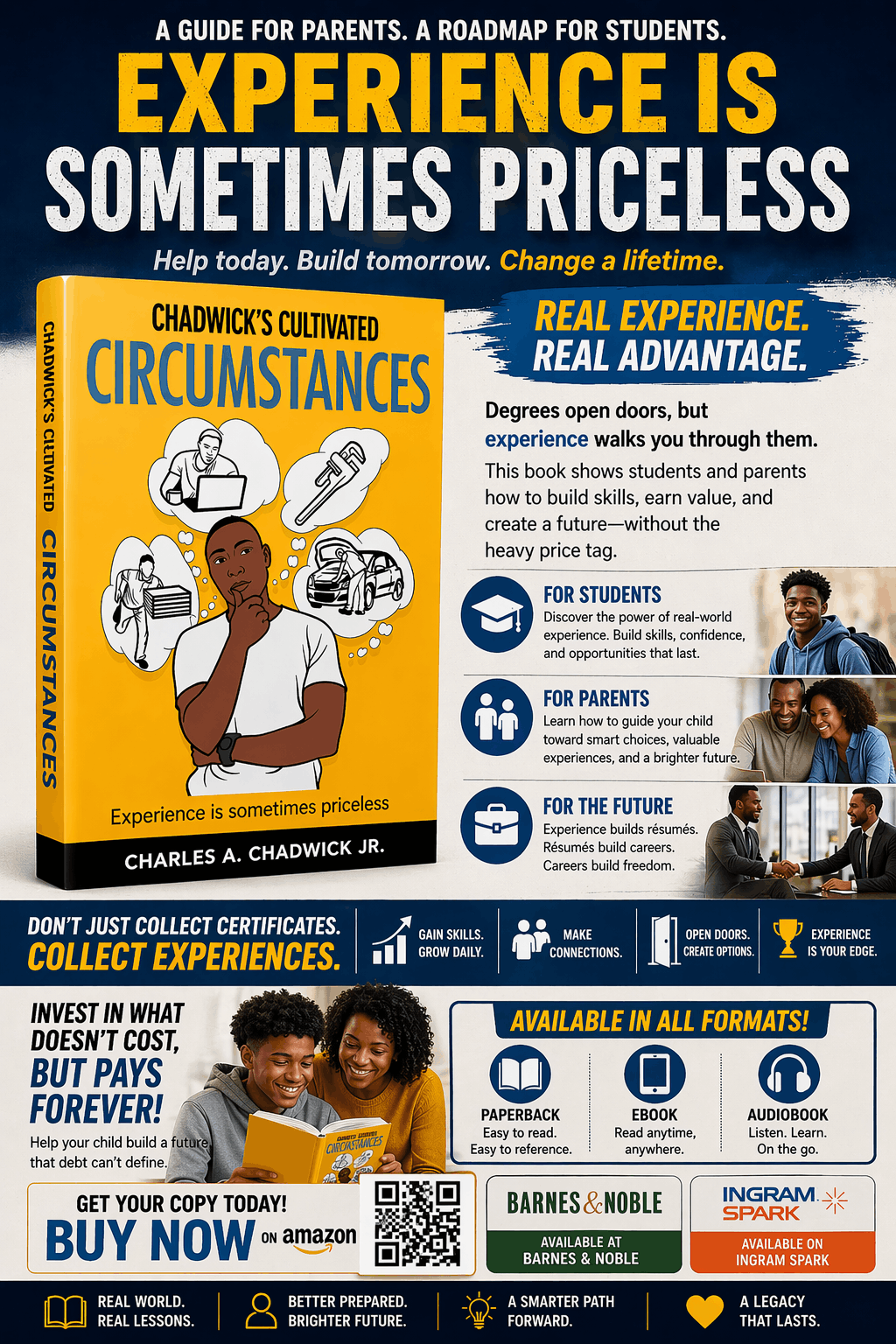
These are the exact skills that decide whether someone thrives financially or struggles for years after graduation. That’s exactly why I wrote Chadwick’s Cultivated Circumstances. It walks through how personal experience, not just a diploma, becomes your greatest classroom and your biggest career asset.
It’s also why more students are exploring entrepreneurship before they even finish school. If that’s a path you’re considering, our article on whether students should build a business before they graduate is a great next read.
Why I Wrote These Books
Everything I write comes from years of personal experience, interviews, research, and a lot of trial and error.
My goal was never to tell people what to think. My goal is to help people ask better questions before they make decisions that follow them for decades.
If you’re a student getting ready for college, a parent thinking about co-signing a loan, or someone weighing college against the trades or entrepreneurship, you owe it to yourself to get informed first. That’s exactly why these books exist:
Chadwick’s College Checklist walks through practical strategies to cut college costs before you ever enroll.
Chadwick’s Cultivated Circumstances shows why real-life experience often becomes life’s greatest classroom.
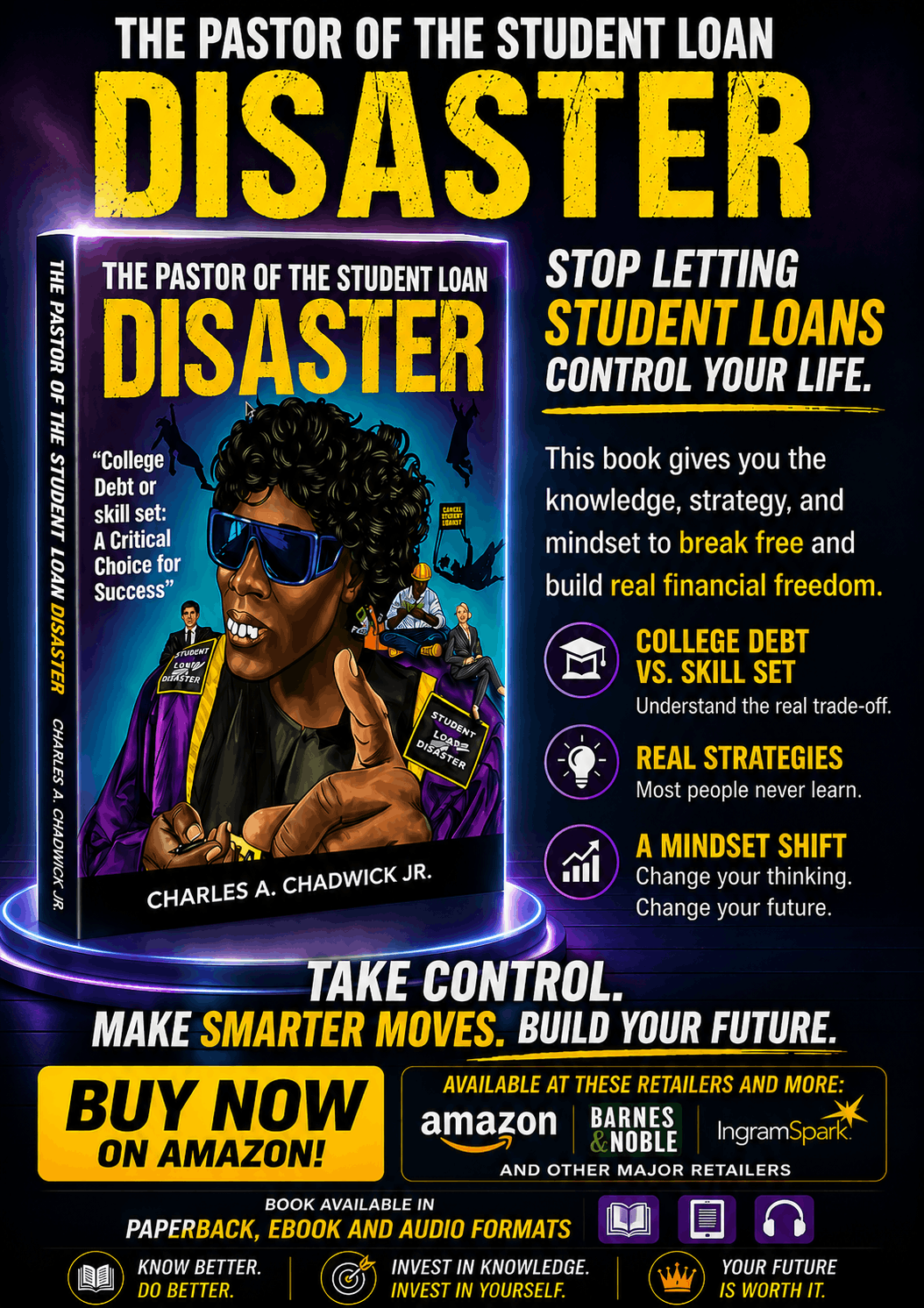
The Pastor of the Student Loan Disaster breaks down the relationship between education, skilled trades, debt, and long-term financial freedom, with a little humor mixed in.
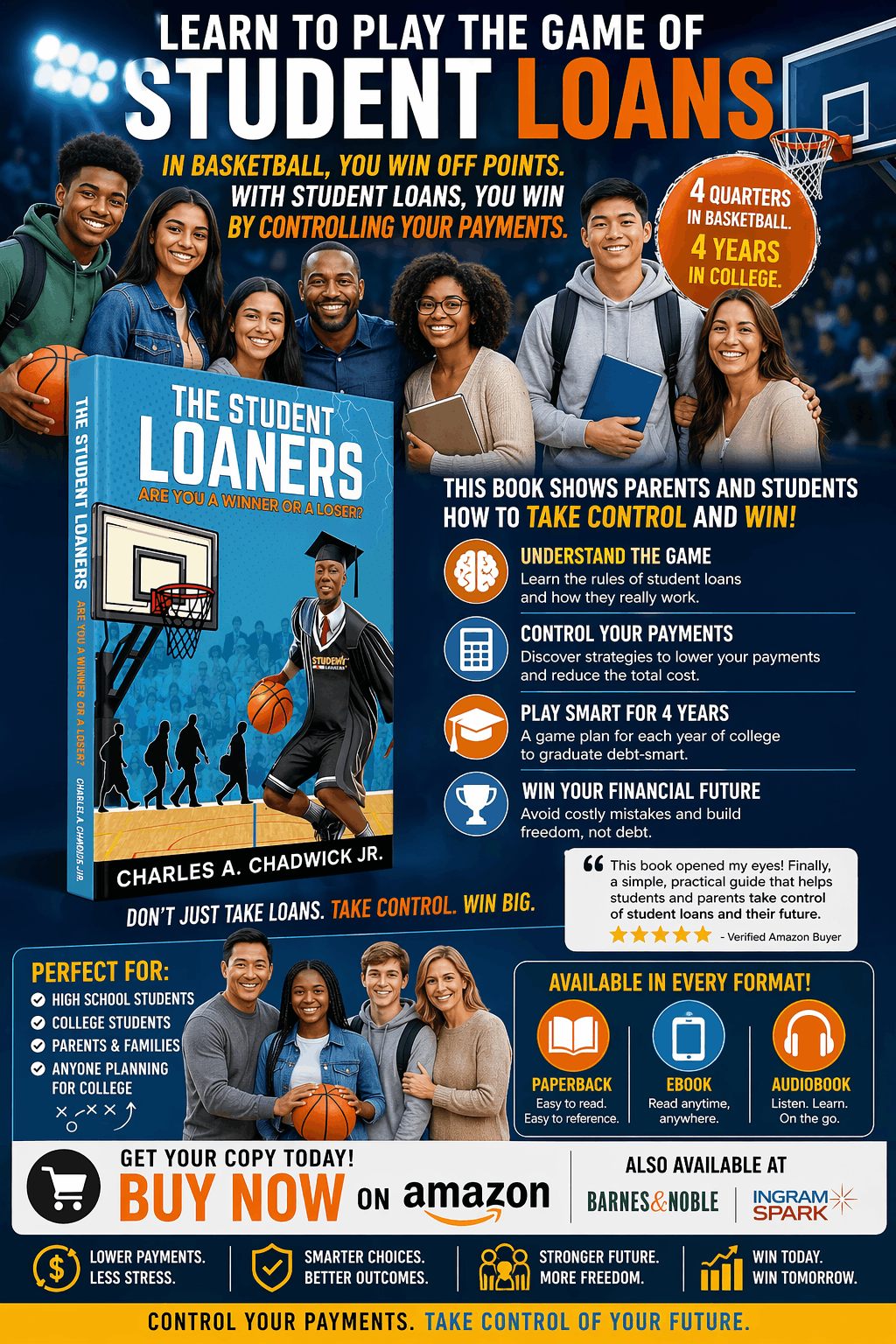
The Student Loaners: Are You a Winner or a Loser? takes a deeper look at student loans, government policy, and the personal responsibility side of the equation most people never talk about.
These books aren’t anti-college. They’re pro-education. More than that, they’re pro-informed decision making.
Reading Allowed Me to See What Many People Missed
One of the biggest lessons reading has taught me is this: it separates opinions from informed conclusions.
For years, I read government reports, researched student loan policy, and studied how the federal loan system actually works. I didn’t rely on headlines or talking points. I went straight to the source and asked questions.
That research led me to a conclusion a lot of people disagreed with at the time. I didn’t believe broad federal student loan cancellation through executive action alone was legally sound. When the issue reached the Supreme Court, the ruling confirmed that the administration didn’t have the authority it claimed for its cancellation plan.
My research and perspective on this topic were featured in Juliette Fairley’s piece on race-based college admissions, published on Patch.
Reading also taught me something most Americans never think about. Federal student loans are actually recorded as assets on the government’s books. That doesn’t mean every loan gets repaid in full, but it explains why student loans are about far more than education. They’re part of the government’s financial system too.
That insight, along with my own cost-cutting strategy, was covered in College Success by Cutting Costs, published by Advisor Perspectives back in 2021.
That experience reinforced something I believe with everything in me.
Reading gives you power. Power gives you knowledge. Knowledge builds understanding. Understanding builds wisdom. And wisdom helps you make better decisions before everyone else catches up.
Final Thoughts
Reading is more than turning pages.
It trains your mind. It sharpens your judgment. It expands your perspective. It prepares you to spot opportunities other people walk right past.
The more you read, the more you understand. The more you understand, the better your decisions become. And better decisions build better lives.
So before you scroll for another hour, pick up a book instead. Study something. Research the facts. Challenge your own thinking.
In today’s economy, the people who keep learning will always have the edge over the people who stopped.
Read more. Learn more. Think deeper. Build wisdom before you chase wealth.
Your future self will thank you.
