

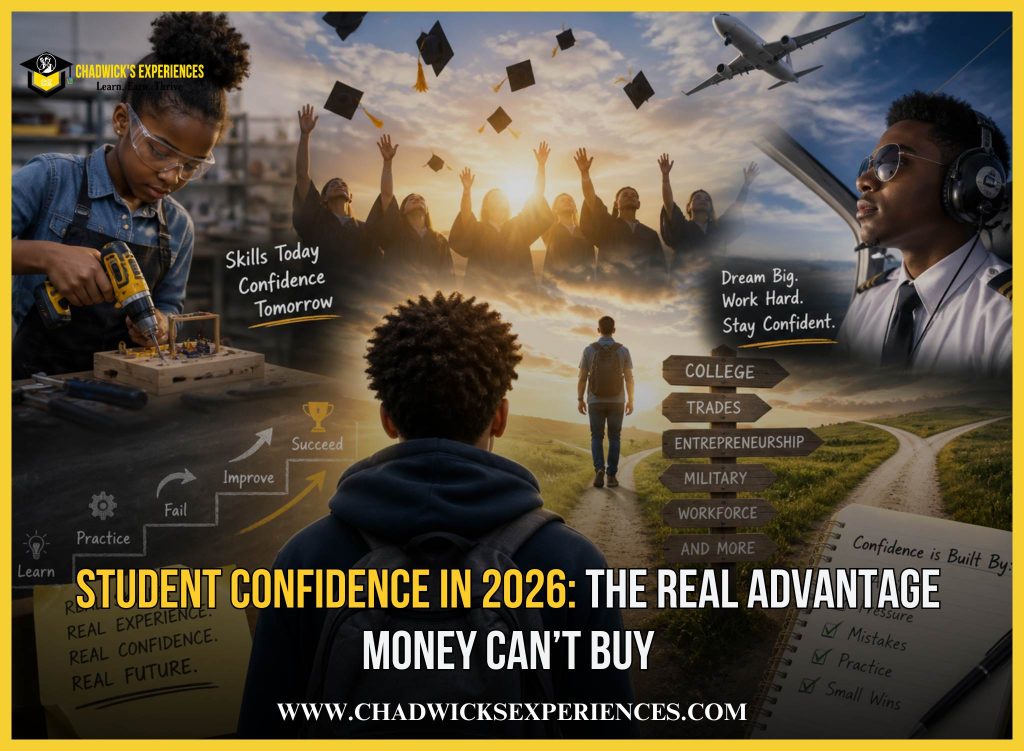

The Real Problem Facing Graduates in 2026
Every year, students graduate with degrees, student loan debt, and uncertainty about what comes next.
But here is what many do not have:
Confidence built through real-world experience.
That is the gap people do not talk about enough.
A student can finish school and still feel unsure. A student can earn a degree and still not know how to move with courage. A student can have knowledge but still be afraid to use it.
That does not mean the student failed. It means the system around them may have focused more on completion than confidence.
Graduation is important. Education is important. Planning is important. But confidence is what helps students use what they learned.
For students and parents thinking about college, career school, or repayment planning, official resources such as Federal Student Aid can help students prepare for college and explore career options. Federal Student Aid also provides resources for understanding college and career school costs, aid, and planning choices. (Federal Student Aid)
Information is useful. Confidence helps students act on it.
College vs. Skills Is the Wrong Question
Many people want to turn this conversation into a fight.
College vs. trades. Degrees vs. skills. Textbooks vs. hands-on work.
But that debate is too simple.
The real question is this:
Are students building confidence while they learn?
Because without confidence, knowledge sits unused. Without confidence, opportunities get missed. Without confidence, fear controls decisions.
A student can have a degree and still lack confidence. A student can have a skill and still lack confidence. A student can have a plan and still freeze when life changes.
So the answer is not just “college.” The answer is not just “trades.” The answer is not just “skills.”
The answer is helping students build confidence while they are learning, growing, working, and choosing.
College can be a path. Trades can be a path. Entrepreneurship can be a path. Military service can be a path. Work experience can be a path.
But confidence is what helps students move with power on whichever path they choose.
That is why students should not only ask, “What path should I choose?” They should also ask, “Am I becoming confident enough to win on this path?”
For readers exploring the value of education and career preparation, it may also help to revisit the value of a high school diploma in today’s world. The bigger lesson is not to downgrade education, but to connect education with confidence, action, and real-world readiness.
Confidence Turns Skills Into Action
A skill by itself is not always enough. A person can know how to do something and still be afraid to start. A person can have talent and still hide it.
Confidence is what helps turn ability into action.
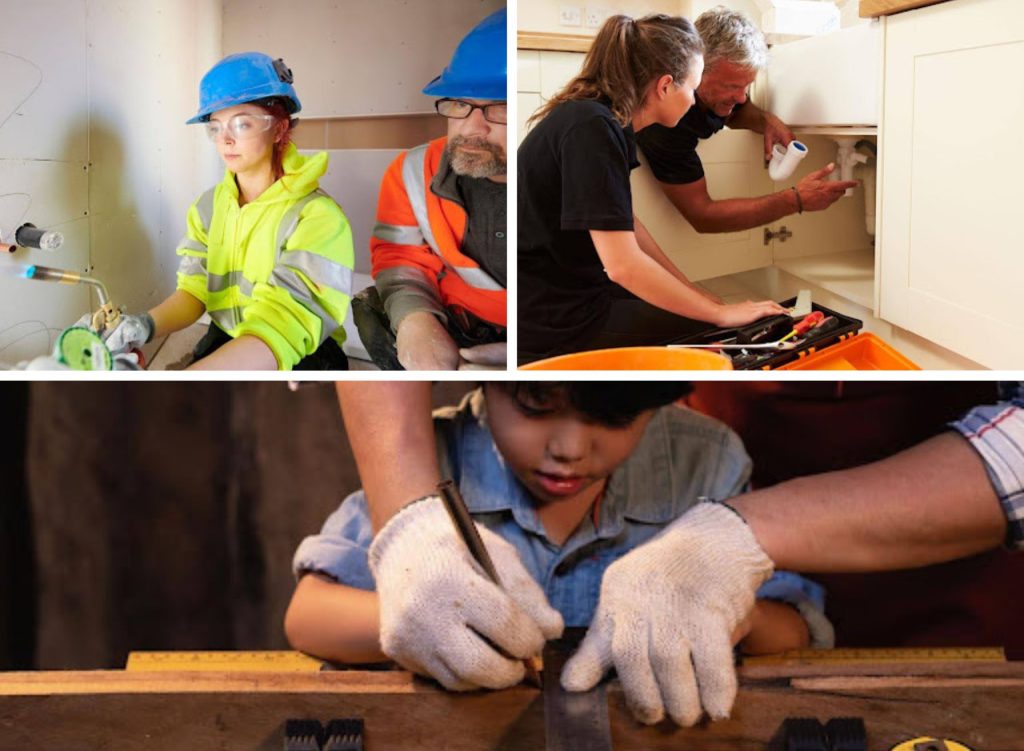
That is why the 4th-grade girl example matters. She is not only learning a skill. She is learning what it feels like to do something useful.
That feeling can shape how she walks into future classrooms, jobs, interviews, and opportunities. She may not know every answer yet, and she does not need to. The point is that she is learning early that action creates confidence.
Once a student learns that, they can apply it anywhere. They can use it in school, at work, in business, in relationships, and when life does not go as planned.
This is also why students should not wait until bills arrive to think about skills. The earlier they understand the connection between learning, earning, and responsibility, the better prepared they may be. That connects with Chadwick’s larger message about learning skills before bills take over.
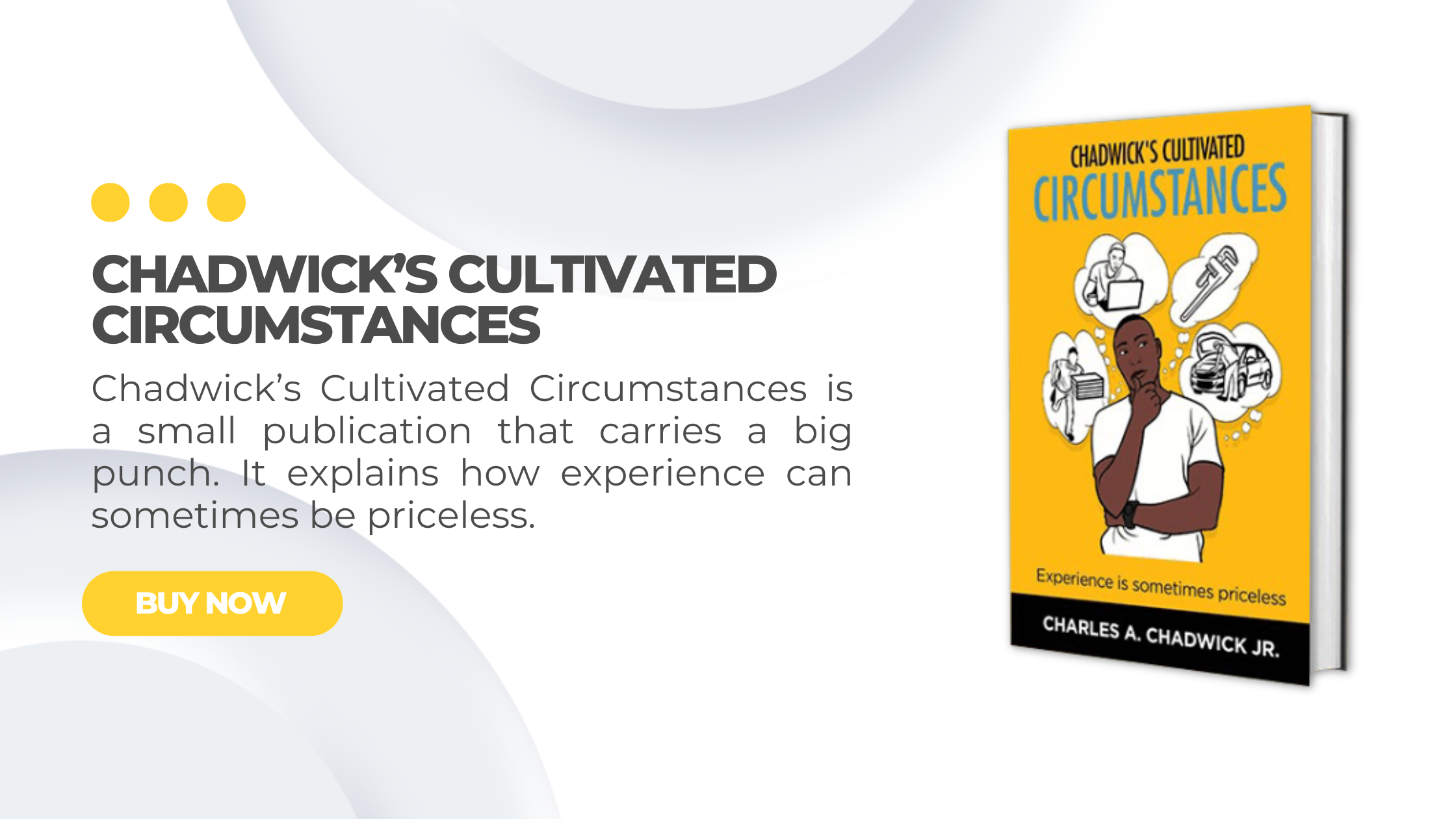
This is also why Charles A. Chadwick Jr.’s book Chadwick’s Cultivated Circumstances: Experience is Sometimes Priceless fits this conversation so well. The book focuses on how personal experiences can translate into workforce value, skill expansion, and career growth.
That message connects directly to student confidence. When students understand that experience has value, they stop seeing every challenge as wasted time. They begin to see each job, skill, lesson, and setback as part of their future advantage.
If this article makes you think differently about confidence, real-world learning, and experience, Chadwick’s Cultivated Circumstances is the most relevant next resource to explore.
Book page: Chadwick’s Cultivated Circumstances
Why Confidence Beats the Perfect Career Plan
Many people spend years trying to choose the perfect career.
But life does not work like that.
People switch careers. Industries change. Opportunities evolve. Plans shift.
Sometimes the path that looked perfect at 18 does not fit at 28. Sometimes the job someone wanted changes. Sometimes a new opportunity appears that was never part of the original plan.
So what helps a student survive those changes?
Confidence.
Not arrogance. Not pretending everything is easy. Real confidence.
The kind that says, “I can learn. I can adjust. I can try again. I can ask better questions. I can build something new.”
That kind of confidence is more powerful than a perfect plan because perfect plans do not always survive real life. Confident people adapt, take lessons from mistakes, and do not treat every setback like the end.
Students can also use career exploration tools like the U.S. Bureau of Labor Statistics Career Exploration page to learn about interests, education, skills, pay, outlook, and work environments. But again, information works best when students have the confidence to explore it honestly.
Career Pathways Need Confidence Too
Career pathways are not just about picking a job. They are about learning how to grow into a future.
That future may include college. It may include a trade. It may include both. It may include work experience, training, certificates, business ownership, or other opportunities.
The U.S. Department of Education’s Career Pathways resources point to the importance of academic and technical skills for preparing students for in-demand work. (U.S. Department of Education)
That fits this conversation because confidence is not against education. Confidence makes education more useful. Confidence is not against technical skills. Confidence helps students use those skills.
Confidence is not against planning. Confidence helps students adjust when the plan changes.
That is the balance students need.
Not fear. Not pressure. Not one-size-fits-all thinking.
They need real preparation. They need real stories. They need real skills. They need confidence.
Chadwick’s Perspective: Real Stories Over Theory
Here at Chadwick’s Experiences, the mission is simple:
Share real stories that prepare students and parents for real life.
Because confidence is not learned only in theory. It is built in reality.
Stories like a young girl learning skills early and Tyrone Arrington proving doubters wrong are more than inspiration. They are blueprints.
They show students that confidence is built through action. They show parents that exposure matters. They show families that the future does not have to be controlled by fear.
They show that students can learn, adapt, and grow when they are given the chance to do real things.
That is the kind of message students need in 2026. Not just, “Choose a path,” but, “Build the confidence to win on the path you choose.”
That message matters because too many students are told what to chase before they are taught how to trust themselves. Too many are pushed toward decisions before they have practiced courage. Too many are asked to think about the future without enough real-world experience in the present.
Confidence changes that.
What Parents and Students Should Take From This
Parents do not need to force every child into the same path. Students do not need to have their whole life figured out by graduation. But both should pay attention to confidence.
Ask better questions:
Is this student getting real-world experience?
Is this student learning how to solve problems?
Is this student being exposed to skills?
Is this student learning from failure?
Is this student being encouraged to ask questions?
Is this student gaining courage through action?
Is this student learning how to adapt?
Those questions matter because the student who builds confidence early may not have every answer.
But they may have something better.
They may have the courage to keep finding answers.
Final Thought: Who Is Really Ahead?
So as students graduate this May, ask yourself something deeper.
Is success about credentials, or confidence?
Is the 4th-grade girl ahead, or is she just different?
And most importantly, are we preparing students to choose one path, or are we preparing them to win on any path they choose?
The real advantage in 2026 may not be money, a title, or even the perfect plan.
It may be confidence built early enough to use every opportunity well.
