
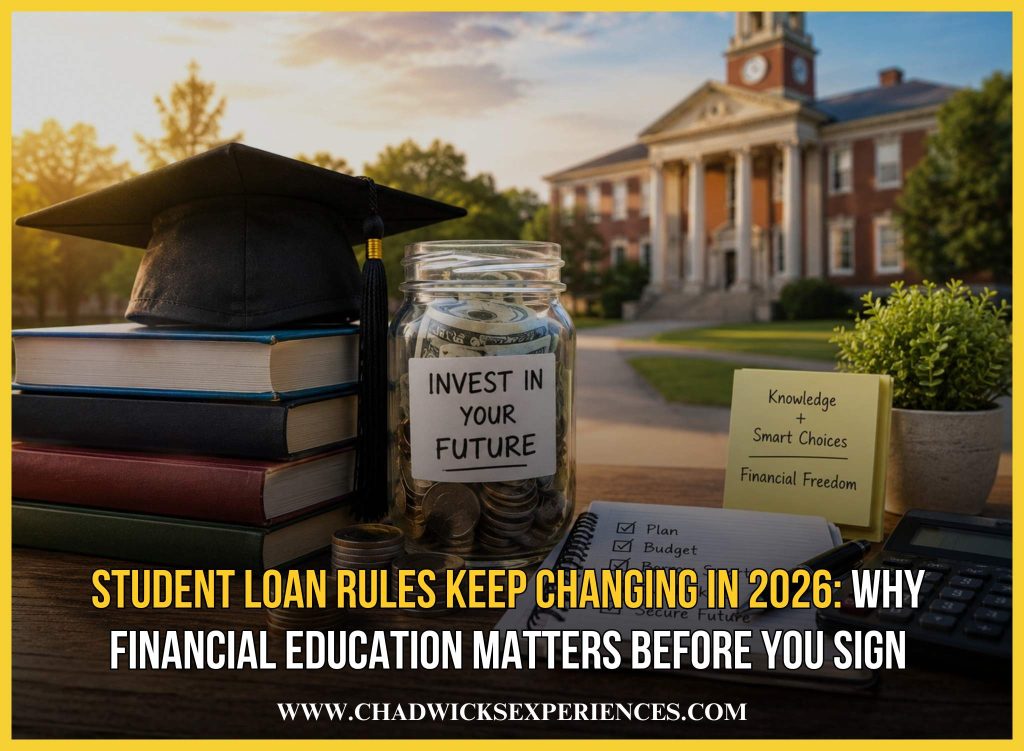
Student Loan Rules Keep Changing in 2026: Why Financial Education Matters Before You Sign
Table of Contents

Every few months, another headline shows up announcing new student loan rules.

One administration introduces a repayment plan. Another administration changes it. A court blocks part of it. Congress rewrites another section.

Borrowers are told to switch plans. Then they’re told to wait. Then the rules change again.

That’s not an exaggeration this year. On July 1, 2026, triggered by the sweeping provisions of the One Big Beautiful Bill Act (also known as the Working Families Tax Cuts Act), the federal student loan system went through its biggest overhaul in decades. If you’re a high school student, a college student, or a parent watching this unfold, you’re probably asking one simple question:

How is anyone supposed to keep up?

In This Guide

  • Quick Answer: What changed on July 1, 2026
  • Borrower Action Plan: What you need to do based on your status
  • The 2026 Overhaul: Timeline and Comparison Table
  • By the Numbers: The current debt landscape
  • The Alternative: Why basic financial literacy beats any repayment plan

Quick Answer: What Changed on July 1, 2026?

  • The SAVE plan ended: The SAVE plan was eliminated for new federal borrowers under the 2026 reforms.
  • Two new options: New federal borrowers now choose between just two repayment options — the Tiered Standard Plan and the new Repayment Assistance Plan (RAP).
  • Grad PLUS loans ended: These are no longer available for new borrowers.
  • Parent PLUS capped: Parent PLUS borrowing is now subject to statutory caps established under the 2026 reforms.
  • 90-day action window: Existing SAVE borrowers are receiving official notices to pick a new plan.

Action Plan: What Borrowers Must Do Next

Borrower Type

Action Required

Existing SAVE borrower

Review your official notice and any applicable deadlines before selecting a new repayment plan.

New borrower after July 1, 2026

Compare the Tiered Standard Plan and RAP options before borrowing.

Parent considering PLUS loans

Review current borrowing limits and eligibility restrictions before committing.

Graduate student

Understand available federal borrowing options and private alternatives after Grad PLUS changes.

What Actually Changed This Year

Let’s get specific, because vague headlines don’t help anyone make a real decision. Here’s what’s true as of this year’s legislative overhaul:

  • The SAVE plan is gone for new borrowers. After ongoing legal battles and legislative changes, the SAVE plan was permanently eliminated. Borrowers previously in SAVE are now receiving official transition notices.
  • New borrowers get two repayment options. Anyone taking out new federal loans after July 1, 2026, can choose only between the Tiered Standard Plan and the new Repayment Assistance Plan (RAP).
  • Grad PLUS loans are gone for new borrowers. Graduate students now face lower federal borrowing limits than before.
  • Parent PLUS loans are capped. Parents can no longer borrow an unlimited amount up to the cost of attendance for their child’s education.
  • A short-term incentive exists. A temporary 1% interest rate reduction is available through June 2028 for borrowers who actively enroll in autopay.

None of this means panic is the right response. It means information is the right response. You can check your own loan status anytime at StudentAid.gov before making any decision about switching plans.

Comparison: Federal Student Loans Before vs. After July 2026

FeatureBefore July 2026After July 2026
SAVE PlanAvailableEliminated for new borrowers
RAP (Repayment Assistance Plan)NoYes
Grad PLUS LoansAvailableEnded
Parent PLUS LoansUnlimited up to Cost of AttendanceStatutory caps applied

The Road to the 2026 Overhaul (Timeline)

To understand how we got here, you have to look at how quickly the landscape shifted:

  • 2023: The SAVE repayment plan is introduced.
  • 2024: Federal court injunctions temporarily halt elements of the SAVE plan.
  • 2025: Ongoing legal challenges leave millions of borrowers in administrative forbearance; The One Big Beautiful Bill Act is signed.
  • July 1, 2026: The new legislation goes into effect, officially launching RAP and the Tiered Standard Plan.
  • September 2026: Earliest action deadlines for borrowers transitioning out of legacy repayment plans.

The Landscape by the Numbers

When we talk about these changes, we aren’t just talking about a few students. We are talking about an entire generation’s economy. According to the U.S. Department of Education, Federal Student Aid, and recent economic reporting:

The Rules Change. Your Signature Doesn’t.

Here’s a lesson I’ve learned from studying student loans for years: governments change, presidents change, Congress changes, and court rulings change. Repayment plans get created, then eliminated, then replaced.

But once you borrow the money, the responsibility to repay it generally stays exactly the same. As I’ve written before, government priorities around student debt shift constantly, but your obligation to pay doesn’t shift with them.

That’s why I encourage every student to think past graduation day and ask questions like:

  • How much will this degree actually cost, in total?
  • What will my monthly payment likely be after graduation?
  • What salary is realistic in this specific career field?
  • Could I get the same result at a less expensive school?
  • Should I start at community college first?
  • Would a skilled trade give me a better return on investment?
  • What happens if repayment rules change again after I sign?

Those seven questions could save you tens of thousands of dollars. For some students, they could save six figures.

This Is Exactly Why I Started Chadwick’s Experiences

For years, I’ve interviewed educators, skilled trades professionals, financial experts, business owners, athletes, and parents. The purpose has always been simple: help people make informed decisions before signing for student loans, not after.

Too many families spend hundreds of hours researching colleges. They compare dorms, dining halls, and campus tours. Then they spend just a few minutes reading the loan contract they’ll be responsible for repaying, sometimes for decades.

That’s backwards. And in a year like this one, it’s an expensive mistake to make.

Reading Changed My Life

People often ask why I spend so much time reading government reports, researching education policy, and interviewing experts instead of just repeating whatever is trending online.

Because reading lets you see what most people overlook.

Long before this year’s changes made national news, I was already researching how federal student loans worked. I wasn’t relying on social media clips. I wasn’t relying on political talking points from either side. I wanted to understand the actual system, not the headline version of it.

That research became the foundation for my books and for the conversations we have on Chadwick’s Experiences.

Why I Wrote My Books

I didn’t write my books because I dislike college. I earned two college degrees myself, and education changed my life.

I wrote them because I wanted students and parents to understand both sides of higher education: the opportunity, and the financial responsibility that comes with it.
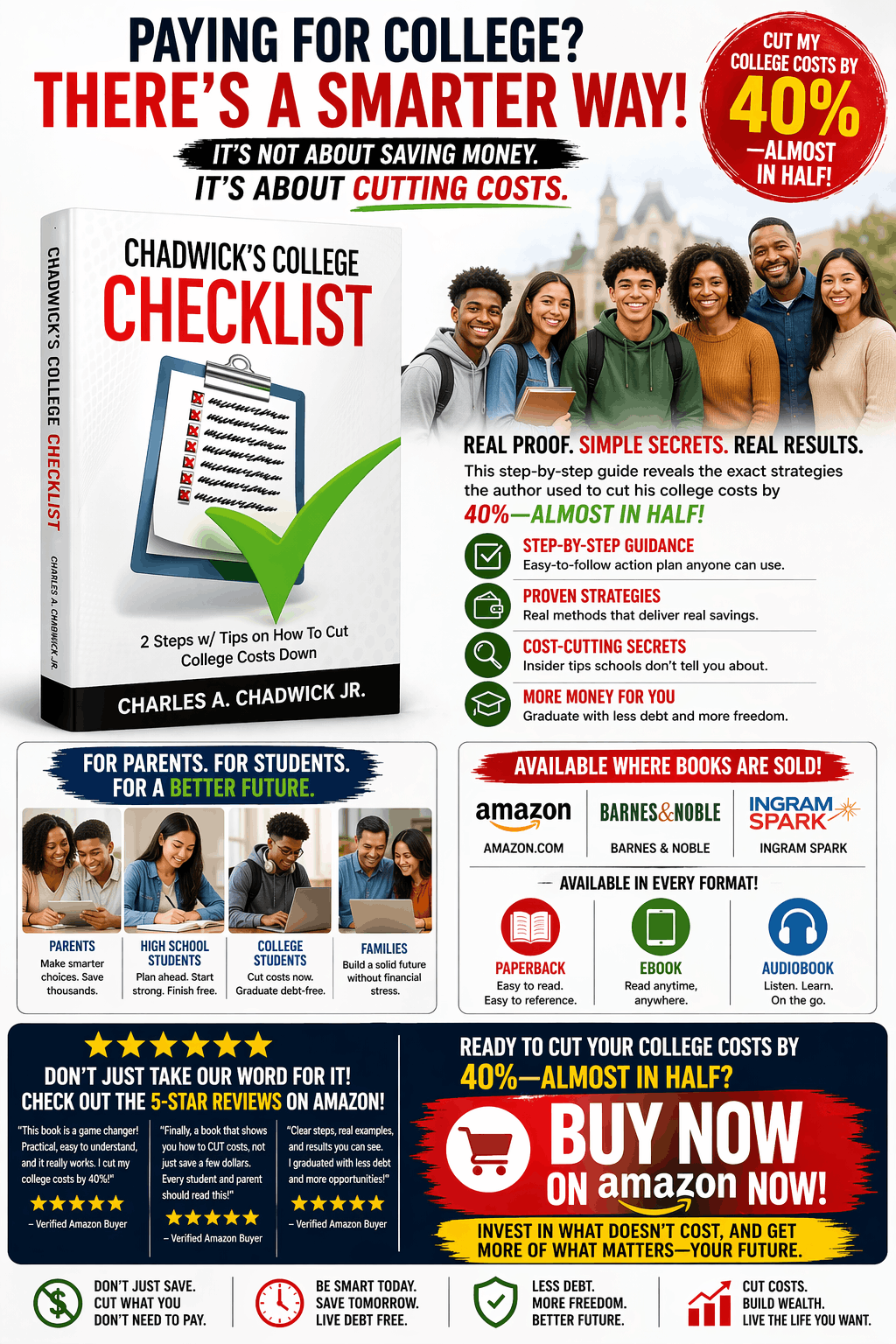
promotional banner for the book "Chadwick's College Checklist" by Charles A. Chadwick Jr., featuring smiling students and outlining step-by-step strategies to cut college costs by 40 percent. The graphic highlights 5-star reviews and purchase options for paperback, ebook, and audiobook formats on Amazon, Barnes & Noble, and Ingram Spark.

In my book, Chadwick’s College Checklist, I break down exactly how I cut my own college costs by 40% while still earning two degrees, without depending on outside financial help to bail me out. My books encourage readers to ask better questions before they ever borrow a dollar. Some of the topics include:

  • Reducing college costs
  • Understanding student loans
  • Building financial literacy
  • Exploring alternative career pathways
  • Skilled trades and apprenticeships
  • Entrepreneurship and side income
  • Thinking long-term instead of emotionally

My goal has never been to tell everyone to skip college. My goal is to help people make smarter financial decisions, whatever path they choose.

College Debt or Skill Set?

One of the biggest questions I ask on Chadwick’s Experiences is this: is your career choice producing an education, or is it just creating debt?

For some people, college is absolutely the right investment. For others, apprenticeships, military service, certifications, skilled trades, or entrepreneurship provide a stronger financial return with a lot less debt attached. I’ve dug into this exact tradeoff in Student Loan Headache or Alternative Pathway, and the honest answer is that there isn’t one right path for everyone.

But there should always be one requirement: understand the financial consequences before you sign anything.

That starts with basic financial literacy, and it’s something most schools still don’t teach students before they graduate. If nobody ever showed you how interest, repayment terms, or loan servicers actually work, that’s not your fault. But it is your responsibility to learn it now, before you’re the one making six-figure decisions at eighteen years old.

Don’t Wait Until Graduation

One of my favorite sayings is this: don’t wait until graduation, use your imagination. It’s okay to make cash while you attend class.

While I was in college, I worked work-study jobs, sold items on eBay for other students, and looked for every way I could to earn income while I was still earning my degree. I go deeper into these kinds of income strategies in Make Cash While in Class: The Future of Work-Study, because waiting until after graduation to think about money is a habit that costs students real dollars every semester.

Some students go a step further and start building something of their own before they even walk across the stage. If that’s you, it’s worth reading Should Students Build a Business Before They Graduate? before you decide your only options are a part-time job or a bigger loan.

That experience taught me something valuable: your education should improve your finances. It shouldn’t be the reason you delay thinking about them.

My Mission Continues

The latest repayment changes are just another reminder that financial literacy isn’t optional. It’s required equipment.

Student loan policies will keep evolving. Repayment plans will keep changing. New administrations will keep introducing new ideas, and courts will keep ruling on them. But one thing never changes: knowledge is one of the best investments you’ll ever make, and nobody can take it away from you once you have it.

That’s why I continue writing books. That’s why I continue interviewing experts. That’s why Chadwick’s Experiences exists, built around a simple three-word mission I explain more in Learn, Earn, and Thrive.

In my book, The Pastor of the Student Loan Disaster, I use humor to tackle a subject most people find stressful, because sometimes you need to laugh your way through the numbers before they start making sense. It’s built for anyone who’s tired of scary headlines and wants a real plan instead.

If my work helps one student avoid unnecessary debt, if one parent asks one extra question before co-signing, if one family compares costs before borrowing, then every interview, every article, and every book has been worth it.

Why Financial Literacy Before College Isn’t a Nice-to-Have Anymore

Here’s the truth nobody likes to say out loud: not having financial knowledge is often worse than not having money. Money can be earned back. Bad financial decisions made from a place of confusion can follow you for twenty years.

This year proved that point better than any lecture could. Borrowers who didn’t know their SAVE plan was ending got caught off guard. Families who didn’t know Grad PLUS loans were disappearing made college choices based on numbers that no longer exist.

The lesson isn’t to be afraid of borrowing. The lesson is to never borrow blind.

Key Takeaways

  • Student loan rules changed dramatically as of July 1, 2026, triggering the transition away from the SAVE plan and introducing new statutory caps on Parent PLUS loans.
  • New borrowers now choose between only two repayment plans: the Tiered Standard Plan and the Repayment Assistance Plan (RAP).
  • Borrowers impacted by the transition should actively review their official notices and check their status at StudentAid.gov rather than guessing.
  • Policy will keep changing. The habit of asking financial questions before you borrow is the one thing that protects you no matter what changes next.
  • Skilled trades, apprenticeships, and community college transfers remain strong alternatives worth comparing before you sign for a four-year loan.

Final Thoughts

Education is powerful. Financial education is just as important.

Before choosing a college, before signing loan paperwork, before assuming repayment plans will always stay the same, take the time to understand the numbers. Read. Ask questions. Compare your options.

Because the best student loan is often the one you never had to borrow in the first place.

About Charles A. Chadwick Jr.

Charles A. Chadwick Jr. is an Author, Speaker, and Visionary, and the host of Chadwick’s Experiences. He interviews experts, educators, skilled trades professionals, entrepreneurs, and financial leaders to help students and parents make informed educational and financial decisions. He reduced his own college costs by 40% while earning two degrees, without relying on loan forgiveness programs.

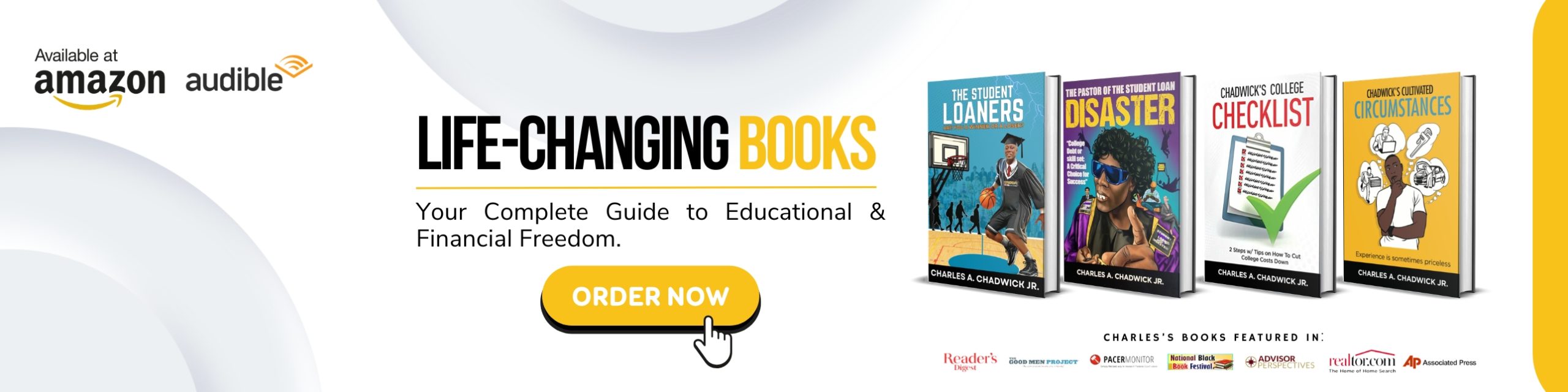
He is also the author of:
FAQs

Federal repayment programs change because of new laws from Congress, actions by presidential administrations, court rulings, and Department of Education updates. As of July 1, 2026, this included the phase-out of legacy IDR plans like SAVE and the introduction of two new repayment options.

There’s no one-size-fits-all answer. Review your official notices, eligibility, estimated monthly payment, and any effect on forgiveness progress before switching. Talk to your loan servicer or check StudentAid.gov before making a final decision.

For many careers, yes. But the value depends on total cost, expected starting salary, and how much you need to borrow. Every education choice should include a realistic financial plan, not just an emotional one.

For many people, yes. Careers in plumbing, electrical work, HVAC, welding, and IT can offer strong pay with far less debt. The right path depends on your interests, abilities, and long-term goals.

New federal borrowers now choose between the Tiered Standard Plan and the new Repayment Assistance Plan (RAP). Existing borrowers impacted by the transition are being notified individually to select an eligible plan.

After earning two degrees and researching higher education and loan policy for years, Charles wanted to help students and parents ask better questions before borrowing. His books cover college, trades, entrepreneurship, and financial literacy as real alternatives worth comparing.

Many families spend months choosing a college and only minutes reviewing how they’ll pay for it. Understanding the long-term cost of borrowing matters just as much as picking the right school.

Often, yes. Scholarships, grants, work-study, community college transfers, living at home when practical, and part-time income can all lower how much you need to borrow.

Review the total tuition, estimated monthly payments, graduation rates, and expected career salary. Compare those numbers against alternative, lower-cost paths before agreeing to co-sign anything.

Follow Chadwick’s Experiences for interviews with educators, financial professionals, and trades experts. You can also check official updates directly at StudentAid.gov.

Charles A. Chadwick Jr.

Charles A. Chadwick Jr. is an author, speaker, and entrepreneur who shares insights on financial literacy and career growth. His journey from plumbing apprentice to business owner serves as an inspiration for achieving financial independence.

Leave a Reply