
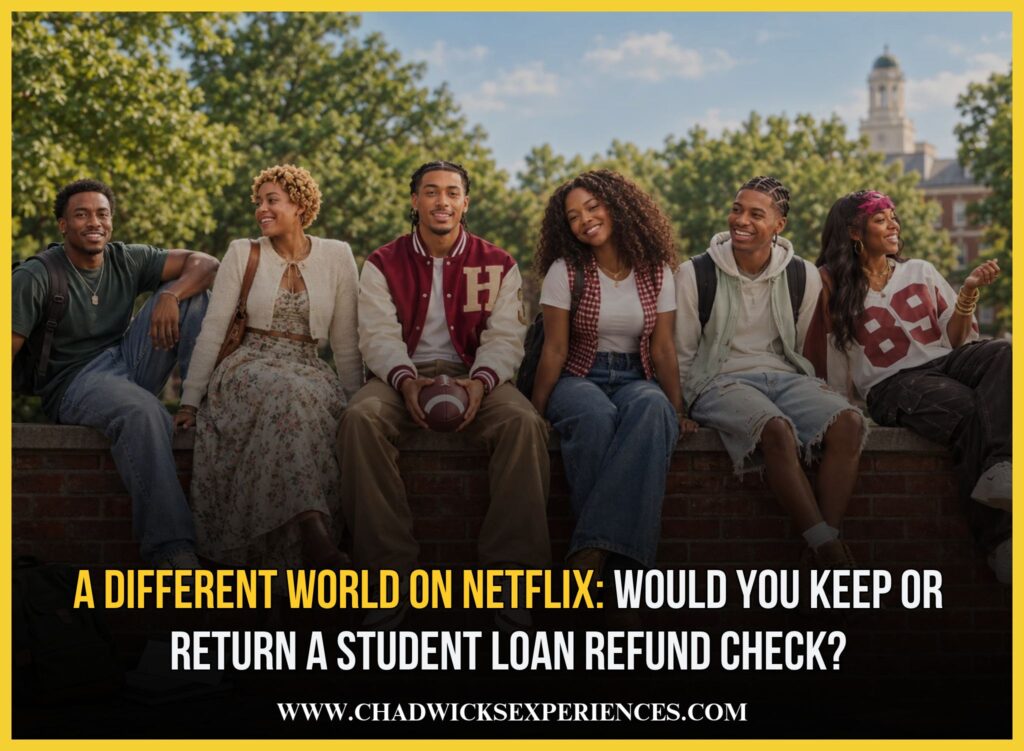
Was Amir right? Partly. We’ll get to that. First, let’s talk about where refund money comes from.
Is a Student Loan Refund Check Free Money?
No. Not if it came from loans.
A financial aid refund happens when your total aid is bigger than your school bills (like tuition and campus housing). The school sends you the leftover credit balance. It might come as a paper check or a direct deposit into your bank account.
Where Does Refund Money Come From?
Your financial aid package can have several parts:
Scholarships: Free money. You don’t repay it.
Grants: Also free money in most cases.
Work-study: Money you earn by working a campus job.
Student loans: Borrowed money. You must repay it with interest.
So a refund can be a mix. Some of it may be yours to keep. Some of it may be debt.
That’s why you must check the source before you spend a dime. Ask your campus financial aid or bursar’s office which part of your refund is loan money. It takes one phone call.
What a $3,000 Refund Really Costs
Let’s use real numbers. For the 2026–2027 school year, the federal interest rate on undergraduate Direct Loans is 6.52%, according to Federal Student Aid.
Say you keep $3,000 of loan money and spend it on new shoes, food delivery, and weekend fun. Then you repay it on a standard 10-year plan after graduation.
You would pay about $34 a month. Over 10 years, that adds up to roughly $4,090. That means about $1,090 of that is pure interest.
Your fun money just became a bill that follows you for ten years.
And for unsubsidized loans, interest starts building as soon as the money is paid out. That means your balance grows while you’re still sitting in class.
Many families don’t see this coming. Our guide on what to know before taking out student loans walks through the basics before you sign.
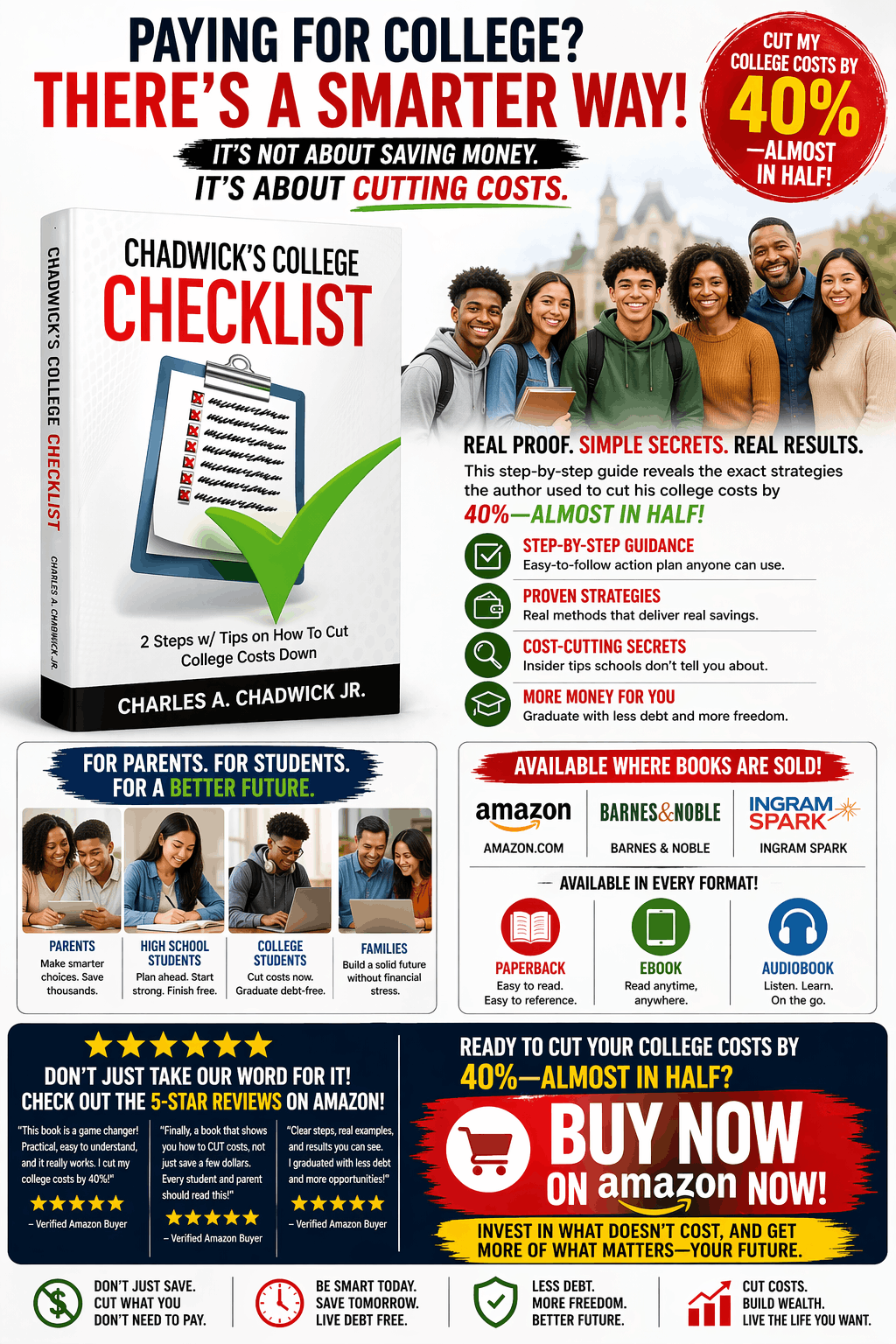
In my book, Chadwick’s College Checklist: 2 Steps with Tips on How to Cut College Costs Down, I share how I cut my own college costs by 40%. The best refund check is the one you never had to borrow for.
Can You Return a Student Loan Refund? The 120-Day Rule
Yes, you can. Many students don’t know this. And it’s one of the smartest money moves in college.
Here is how it works for federal student loans:
Find out the source. Ask the financial aid office how much of your refund came from federal student loans.
Ask to cancel or return it. Tell the school in writing that you want to cancel and return the loan portion you don’t need.
Move fast with your school. After you are notified of your right to cancel, the school must process and return the funds on your behalf within 14 or 30 days of your request, depending on its notification timeline.
Use the 120-day window. If you miss the school’s window, you can still return the money directly to your federal loan servicer within 120 days of the disbursement date. Specify that you are returning unused loan funds so it is applied to your principal.
Get the interest and fee benefit. When you return federal loan money within 120 days of disbursement, the accrued interest and federal origination fees on that returned amount are completely canceled.
Double-check your balance. Log in to StudentAid.gov a month later and make sure your principal balance and fees dropped.
After 120 days, any money you send back counts as a regular prepayment. Interest and origination fees you’ve already built up will not be reversed.
Rules can differ by school and loan type. Private lenders set their own policies. Always confirm the exact steps with your school and loan servicer.
Was Amir Right to Decline the Check?
Mostly, yes. His instinct was solid. Borrowed money is not a prize.
But there are two catches:
First, his logic only works if the refund came from a loan. A refund made up of grants or scholarships belongs to the student with no interest attached.
Second, Amir has no dorm room because of Hillman’s housing shortage. He may need real cash to pay for off-campus rent and groceries. If that’s the case, using a planned portion of the funds for housing is a necessity, not wasteful spending. The key is to budget what you truly need and return the rest.
My rule is simple: borrow only what you need and return what you don’t.
“Never confuse access to borrowed money with financial freedom. People solve problems, not money.” — Charles A. Chadwick Jr.
Student Loan Repayment Changes in 2026: What the Forbes Report Means
The student loan story isn’t only on Netflix. It’s in the news every week.
On October 9, 2026, Forbes contributor Adam S. Minsky reported on major changes to federal repayment plans. He cited Federal Student Aid data showing that roughly 13 million borrowers are enrolled in Income-Driven Repayment (IDR) plans.
What’s an IDR plan? It sets your monthly payment based on your income and family size. Your payment can change from year to year.
Now those plans are shifting. Here is the simple breakdown as of October 2026:
| Repayment Plan | What Is Happening in 2026 |
SAVE Plan | Being wound down. Borrowers were given roughly three months to switch plans or be placed into the Standard plan. Over 1 million borrowers have already exited. |
PAYE Plan | Being phased out completely by July 2028. |
ICR Plan | Being phased out by July 2028. Eligibility rules for Parent PLUS borrowers have also tightened. |
IBR Plan | Remains available. Now open to borrowers at any income level, with monthly payments capped at the 10-year Standard plan amount. |
RAP (Repayment Assistance Plan) | New income-driven plan launched in July 2026. It features a 30-year forgiveness term and an interest subsidy benefit. |
What About the New RAP Plan?
The Repayment Assistance Plan (RAP) is often cheaper per month than IBR. However, it usually costs more per month than SAVE or PAYE did, and its 30-year forgiveness timeline is longer than older plans.
Some borrowers may pay more over the life of the loan under RAP, though it includes an interest benefit designed to stop loan balances from ballooning when monthly payments don’t cover all the interest.
Why This Matters Before You Borrow
Here is the big lesson: the government rules for your student loan can change long after you graduate.
So before you sign a loan agreement, ask yourself:
What is my exact interest rate?
How much will I owe in total when I graduate?
What could my monthly payment look like on a standard 10-year plan?
What happens if my repayment plan changes or I can’t afford the bill?
Is there a cheaper path to the same career goal?
Our post on how student loan rules keep changing in 2026 explains why financial literacy matters before you sign anything.
A college degree takes four years. Student loan repayment can take decades.
Colleges Are Cutting Tuition. Should You Celebrate?
Here’s some encouraging news. Families are pushing back against high prices, and colleges are starting to listen.
On October 6, 2026, Fox Business reported on a wave of college tuition cuts, expanding on a Bloomberg investigation published the day before. Here is a quick look at the schools resetting their prices:
| College / University | Reported Tuition Change |
Emory & Henry University | Cut undergraduate sticker tuition by roughly half, down to $19,900. |
University of Tulsa | Announced plans to cut tuition and fees from $54,000 to $25,000. |
Carroll College | Announced a 40% tuition cut to $26,800 starting fall 2027 and eliminated undergraduate fees. |
Cornerstone University | Previously cut tuition by 22% to $22,000 and has frozen its rate every year since. |
Concordia University, St. Paul | Announced plans to cut tuition by another $5,500, following an earlier 33% cut in 2013. |
After lowering its tuition, Emory & Henry reported its largest incoming class in 190 years—nearly 30% more students than the previous fall.
That tells us something important. When families have affordable choices, they respond.
Sticker Price vs. Net Price
Here’s the catch. A lower price tag on a billboard doesn’t always mean a lower out-of-pocket bill for your family.
Before its tuition cut, Emory & Henry offered institutional merit scholarships of up to $23,000 off a $40,000 sticker price. After dropping tuition to $19,900, its top merit scholarship is now up to $5,000. The advertised price fell, but so did the tuition discounts.
That’s why every parent and student must know two terms:
Sticker Price: The published tuition and fees advertised on the school’s website.
Net Price: What your family actually pays out of pocket after grants and scholarships are subtracted from the total cost of tuition, housing, meals, books, and fees.
Here is a simple example:
School A advertises $20,000 in tuition and gives you $2,000 in grant aid. Your net tuition is $18,000.
School B advertises $35,000 in tuition and gives you $20,000 in grant and scholarship aid. Your net tuition is $15,000.
School B looks way more expensive on paper, but it is actually $3,000 cheaper per year for your family.
Always run each school’s online Net Price Calculator and compare official financial aid award letters side by side. Wondering why college prices got so inflated in the first place? Read the truth about college tuition markup.
College Debt vs. Skill Set: Why You Need More Than One Path
Let me tell you where I’m coming from.
I started out as a plumbing apprentice. I later earned two college degrees. By working and applying what I knew, I cut my college costs by 40%. And I paid off my student loans without waiting on government forgiveness programs.
Skills made that possible.
Think about Amir in A Different World for a second. He’s stuck without a dorm room and stressed about taking on loan interest. Now imagine he entered college already knowing a high-demand skill—like plumbing, electrical work, HVAC, carpentry, or tech repair. He could earn strong part-time money while taking classes and avoid borrowing extra cash altogether.
I’m not saying skip college. A college degree can open big doors. A marketable skill set helps you pay to walk through them. I call this the Duality Mentality for the Economy. You don’t have to pick only one path.
Before taking on massive debt, students should explore every pathway:
Trade schools and skilled trades
Paid registered apprenticeships
Community colleges (and transferring credits)
Employer-sponsored tuition assistance
Scholarships and grants
Military education benefits (for eligible students)
Short-term workforce certifications
Many young adults are already making this shift. See why the Toolbelt Generation is trading four-year degrees for skilled trades.
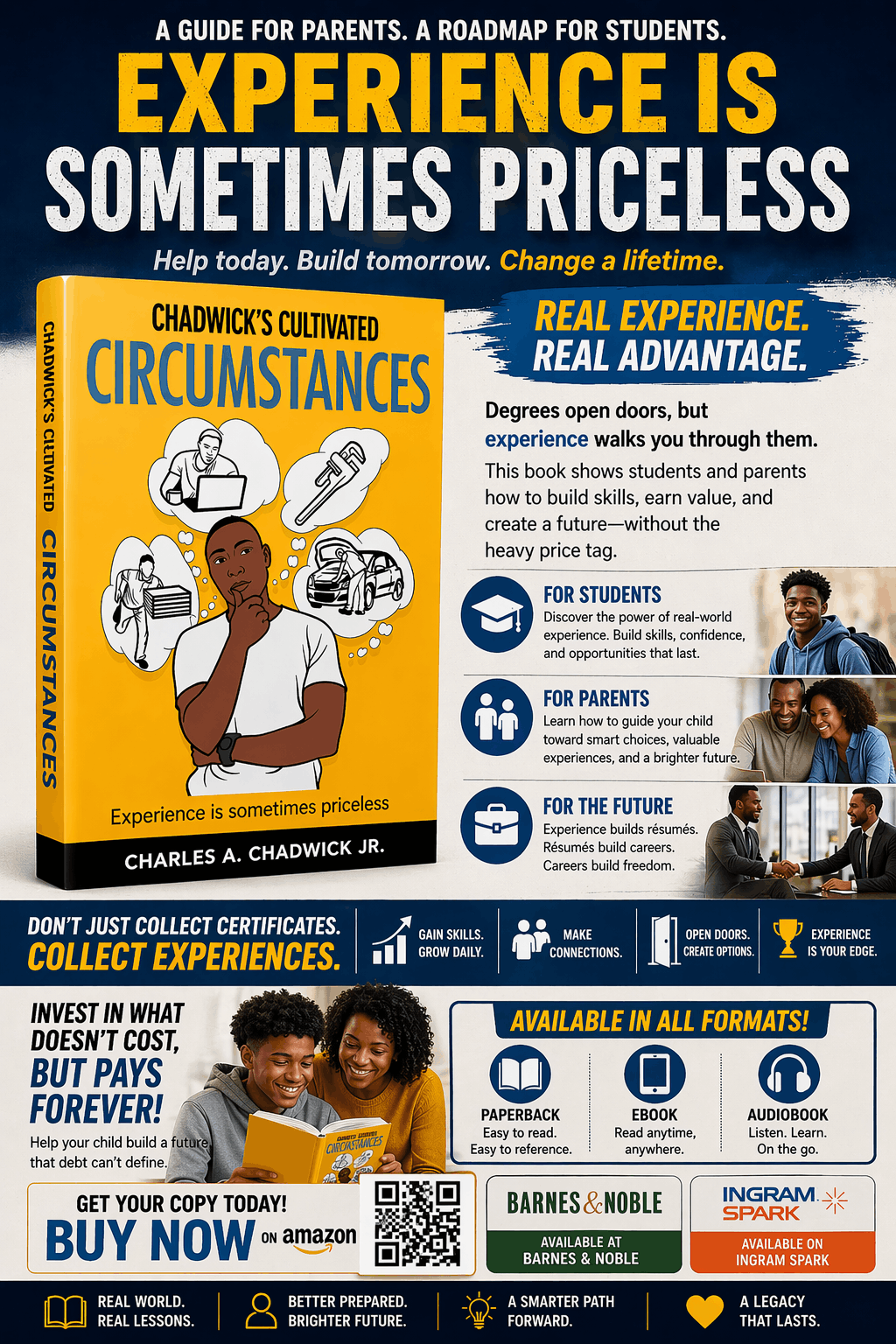
My book, Chadwick’s Cultivated Circumstances: Experience Is Sometimes Priceless, shows how real-life, hands-on experience can turn into real income before you ever step onto a college campus.
5 Money Lessons from Hillman College
Here is what every student and parent can take away from Netflix’s A Different World and the 2026 student loan landscape:
Know the difference between aid and debt. Scholarships and grants are gift aid; student loans are borrowed money that must be repaid.
Don’t treat a loan refund like free income. Spending a loan-funded refund check on lifestyle wants will cost you years of interest.
Use the 120-day return window. Return unneeded federal student loan funds within 120 days of disbursement to wipe out the interest and fees on that amount.
Compare net price, not sticker price. Look past tuition headlines and calculate your true out-of-pocket cost after scholarships and grants.
Plan for repayment before you sign. Estimate your total debt, monthly payment, and starting salary—and build a practical skill set that helps you earn while you learn.
Final Thoughts: Would You Keep It or Return It?
The original A Different World taught a whole generation how to think about college life. Now, the 2026 Netflix revival is sparking a financial conversation every family needs to have around the kitchen table.
With repayment plans shifting for 13 million borrowers and colleges resetting their tuition prices, one truth remains the same: financial literacy must start before enrollment, not after graduation.
Now I want to hear from you: If your college handed you a $3,000 student loan refund check today that you didn’t need for basic living expenses, would you cash it or return it under the 120-day rule? Drop your honest answer in the comments below!
